In the world of luxury authentication, transparency is paramount. You deserve to know what you are paying for and why. While most authentication requests fall under a standard fee, certain items require a deeper level of scrutiny, specialized knowledge, or additional risk assessment. This is where add-on fees come into play.
The term “add-on fee” can sometimes feel like a surprise charge, but in the professional authentication industry, these fees are a necessary and transparent part of the process. They reflect the additional time, expertise, and resources required to accurately assess unique, complex, or high-value items. This isn’t about charging more for the sake of it; it’s about ensuring you receive the most thorough and reliable verdict possible.
This guide will demystify the world of add-on fees. We’ll explore why authentication service fees sometimes vary, what kinds of items typically incur these charges, and how these specialized services ultimately benefit you as a buyer or seller. Understanding the “why” behind the cost helps you appreciate the value you receive in return.
What Are Add-On Fees in Authentication?
At its core, an add-on fee is an additional charge applied to a standard authentication service for items that fall outside the typical scope. A standard authentication might cover a contemporary, mass-produced luxury handbag. The process is streamlined because the authenticator has seen hundreds, if not thousands, of similar examples.
However, not all items are standard. An add-on fee signals that your item requires more than the usual checklist approach. It needs a senior authenticator, more extensive research, or carries a higher level of liability for the authentication company.
Think of it like visiting a doctor. A routine check-up has a standard cost. But if the doctor discovers a complex issue that requires a specialist consultation, advanced imaging, and a detailed diagnostic report, the cost of care increases. The add-on fee in authentication works on the same principle: it covers the cost of bringing in a specialist.
You can see the standard costs and the specific circumstances for add-ons clearly outlined on our services and pricing page. We believe in upfront honesty so you can make an informed decision before submitting your item.
The Case for Vintage: Why Older Items Cost More to Authenticate
One of the most common reasons for an add-on fee is the age of an item. Vintage item authentication is a completely different discipline compared to authenticating a bag from last season. It’s less of a science and more of an art, blending historical knowledge with hands-on expertise.
1. The Ever-Changing “Rules” of Manufacturing
Luxury brands like Louis Vuitton have been producing goods for over a century. Their manufacturing processes, materials, and branding details have not been static; they have evolved dramatically over the decades.
- Date Codes: The modern Louis Vuitton date code system is well-documented. However, the systems used in the 1980s were different, and pre-1980s items often had no date codes at all. An authenticator needs to know the specific font used by a French factory in 1982 versus an American factory in 1989.
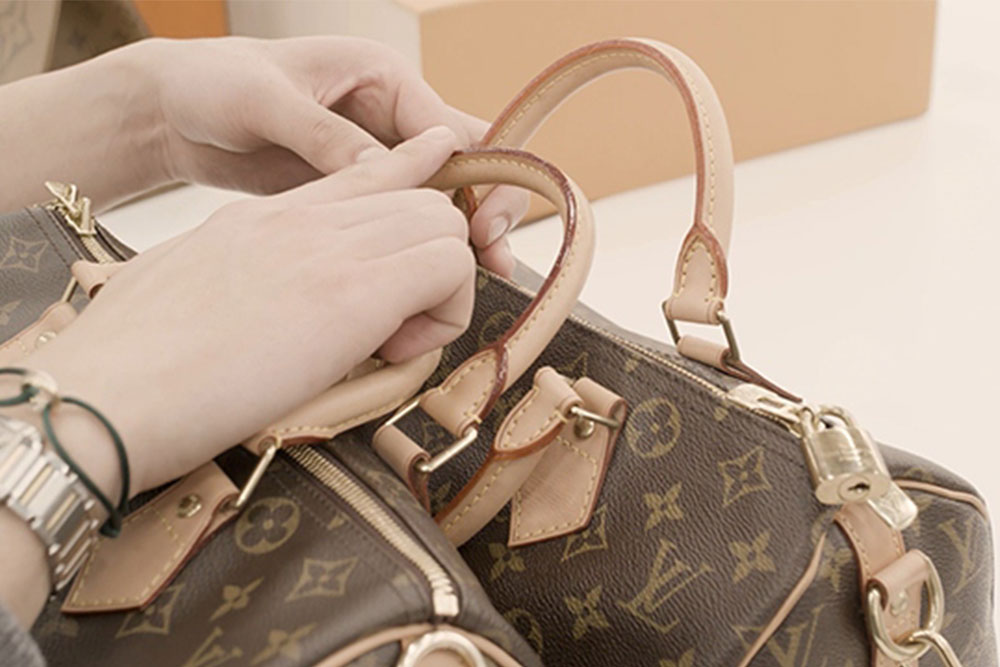
- Hardware: A zipper from a 1970s Speedy will look and feel different from one made today. The engravings, the shape of the pull, and even the metal composition have changed. A modern authenticator who only knows current hardware might incorrectly flag a vintage piece as fake.
- Linings and Materials: Brands experimented with different linings and canvas treatments over the years. Some vintage bags feature a specific, slightly abrasive lining that is no longer in use. Only a seasoned expert in vintage goods would recognize this as a sign of authenticity rather than a red flag.
Authenticating a vintage piece requires a mental archive of historical production details. This knowledge is rare and built over years of dedicated study. The add-on fee compensates the expert for this specialized, hard-won knowledge.
2. The Scarcity of Comparison Points
When authenticating a 2022 Neverfull, an expert can pull up thousands of reference images of authentic examples. For a rare, limited-edition piece from 1991, there may only be a handful of verified examples in existence.
This means the authenticator can’t just rely on pattern matching. They have to engage in historical research. They might need to consult auction house records, brand catalogs from the era, or tap into a network of fellow vintage specialists. This research takes significantly more time and effort than a standard authentication.
3. Condition and Repairs
Vintage items have lived a life. They often come with replaced zippers, reglazed edges, or patched corners. An authenticator must not only verify the original parts of the item but also correctly identify any repairs. They need to determine if a repair was done by the brand itself or by a third party, as this dramatically impacts the item’s value and desirability. Distinguishing a 40-year-old authentic component from a 20-year-old high-quality replacement requires an exceptionally trained eye.
High-Value Items: When the Stakes Are Higher
Another common trigger for an add-on fee is the item’s market value. High-value item authentication carries a different weight for both the client and the authenticator. This fee isn’t a “tax” on wealth; it’s a reflection of increased risk and the need for absolute certainty.
1. The “Super-Fake” Problem is Magnified
Counterfeiters put the most effort into replicating items they can sell for the highest profit. The fakes for a $15,000 Hermès Birkin are exponentially more sophisticated than those for a $500 wallet. These “super-fakes” use real leather, are often hand-stitched, and replicate hardware with incredible precision.
To confidently authenticate a high-value item, an expert must:
- Go Microscopic: They may need to analyze the stitching pattern, the font of the stamp, and the hardware engravings under magnification to spot tells that are invisible to the naked eye.
- Involve Multiple Experts: For very high-value items, best practice often involves a “second opinion” or a peer review process. Having two senior authenticators independently review the item and come to the same conclusion ensures the highest possible level of accuracy. This doubles the labor involved.
- Assume Greater Liability: When an authentication service puts its name on a certificate for a $20,000 bag, it is accepting a much higher level of liability than for a $500 bag. If they make a mistake, the financial and reputational damage is immense. The add-on fee helps to mitigate this increased risk.
2. The Psychology of High-Value Transactions
Buyers and sellers of high-value items need more than just a “yes” or “no.” They need unshakable confidence. The add-on fee ensures that the authentication company is dedicating its top resources to the request. It provides peace of mind that the verdict is not just a quick opinion but a rigorously verified conclusion.
When you’re about to spend the price of a small car on a handbag, paying a small premium for a rock-solid, multi-expert opinion is a wise investment. The trust that this level of service provides is a recurring theme you’ll see on our reviews page, where clients emphasize the value of that confidence.
Other Scenarios for Add-On Fees
While vintage and high-value status are the most common reasons, other situations can also warrant an add-on fee.
Complex Items and Collections
Sometimes the complexity comes not from the item’s age or value, but from its structure.
- Trunks and Hard-Sided Luggage: These items have more components to inspect—more rivets, more locks, more slats, more interior trays. They are physically larger and more complex than a simple handbag.
- Large Lots: A client might submit a single request for “a collection of 15 wallets.” While they may seem like one submission, they are 15 individual items that each need to be authenticated. In these cases, the fee structure is adjusted to reflect the actual number of items being reviewed.
The “Specific Item Name” Add-On
For resellers, knowing an item is authentic is only half the battle. You also need to know exactly what it is to list it correctly and maximize its value. Is it a “Speedy 30” or a “Speedy 35”? Is it the “Monogram” canvas or the limited-edition “Monogram Multicolore”?
The “Specific Item Name” is a value-added service. The authenticator leverages their deep product knowledge to provide you with the exact model name, style, and sometimes even the official color name.
Why is this worth paying for?
- SEO for Resale: Buyers search for specific terms like “Louis Vuitton Pochette Accessoires.” If you list it vaguely as “LV Small Bag,” you will miss out on a huge pool of motivated buyers.
- Pricing Accuracy: The market value of a “Boulogne 30” is different from a “Trocadero 27.” Knowing the correct name allows you to research comps and price your item correctly, often leading to a higher sale price that more than covers the small add-on fee.
- Building Buyer Trust: A detailed, accurate title shows that you are a knowledgeable and professional seller.
This service transforms the authenticator from a simple gatekeeper into a strategic partner who helps you improve your business.
How Add-On Fees Benefit the Customer
It can be tempting to view these fees as a negative, but they are structured to provide direct benefits to the client.
1. Ensures You Get the Right Expert for the Job
By charging an add-on fee for vintage, the service can afford to retain true vintage specialists. It prevents a situation where a junior authenticator, trained only on modern bags, is forced to make a judgment call on a 50-year-old piece they are not qualified to assess. The fee acts as a triage system, routing your complex item to the expert best equipped to handle it.
2. Protects the Integrity of the Service
If an authentication service tried to charge a single flat fee for every item, they would face a difficult choice.
- Option A: Charge a high flat fee (e.g., $50) for everyone to cover the cost of the occasional complex item. This would unfairly penalize the 90% of clients with standard items.
- Option B: Charge a low flat fee (e.g., $10) for everyone. At this rate, they would lose money on every vintage or high-value item they authenticate, forcing them to rush the process or cut corners. This would destroy their accuracy and reputation.
The tiered model of standard fees plus add-ons is the fairest system. It ensures that you only pay for the resources you actually use.
3. Provides a More Detailed and Defensible Verdict
When an add-on fee is applied, it often comes with a more detailed explanation of the verdict. For a high-value item deemed non-authentic, the report you receive will likely be far more comprehensive, detailing every single point of failure. This level of detail is crucial if you need to file a dispute with PayPal, a credit card company, or a selling platform. The add-on fee pays for the creation of this robust, evidence-based report that can help you win your case.
Red Flags: When Are Add-On Fees Not Justified?
While legitimate add-on fees are a sign of a professional service, some companies may try to exploit the concept. Here are some red flags to watch out for:
- Hidden Fees: The fee is not mentioned anywhere on their pricing page and only appears as a surprise on your invoice after the fact. A trustworthy service, as shown on our services and pricing page, is upfront about all potential costs.
- Vague Justifications: When you ask why a fee was added, the answer is a generic “because it’s a special item.” They should be able to tell you why it’s special—e.g., “This fee was applied because the item is from the early 1980s and required verification against our historical hardware database.”
- Excessive Fees for Minor Things: Charging an add-on fee because a bag is a popular color or from three seasons ago instead of one is not standard practice. The fees should be reserved for items that genuinely require a higher level of work.
Conclusion: A Price for Certainty
In the luxury market, certainty has value. Authentication service fees are not just a cost center; they are an investment in that certainty. Add-on fees for vintage, high-value, and complex items are a fair and logical extension of this principle.
You are not just paying more; you are paying for more expertise, more time, more research, and more security. You are ensuring that your rare vintage find is assessed by a historian, not just a technician. You are ensuring that your high-stakes purchase is scrutinized by multiple senior experts. And you are empowering your resale business with the precise information needed to thrive.
By understanding the logic behind these fees, you can shift your perspective from viewing them as an expense to seeing them as what they are: a premium service for a premium product. They are a core component of a system designed to protect the integrity of the market and provide you with the ultimate peace of mind.
If you have an item that you think might require special attention, don’t hesitate to reach out. We believe in full transparency and are happy to discuss the process with you. Explore our pricing structure on our services and pricing page and see why countless collectors and resellers trust our expertise, as shared on our reviews page.
Louis Vuitton Authentication made easy!
You are unsure if you are looking at an authentic or fake LV? We offer the quickest and the most accurate way to get it authenticated for your peace of mind.
Authenticate Now