You’ve taken the plunge. You found a beautiful, pre-loved designer bag online, the price was right, and you clicked “buy.” Or perhaps you’re a seller, clearing out your closet to make room for new treasures. You submit photos for authentication, expecting a quick “authentic” or “counterfeit” verdict. Instead, you receive a response you didn’t expect: “Unable to authenticate.”
It’s a frustrating moment. You want answers. You want certainty. Is it real? Is it fake? Why can’t the experts tell?
In the world of luxury authentication, while most items fall clearly into the “authentic” or “inauthentic” categories, there exists a grey area where a definitive judgment simply isn’t possible. This isn’t due to a lack of expertise—in fact, it’s often the expertise that prevents a guess. Professional authenticators operate on evidence, not hunches. When the evidence is missing, altered, or inconclusive, a responsible authenticator must decline to render a verdict.
In this comprehensive guide, we will explore the specific reasons why some items cannot be authenticated. We’ll dive into the challenges posed by vintage items, alterations, and severe damage. We will also discuss what happens next for buyers and sellers when an item hits this authentication limbo, and how Pro Authenticators handles these delicate situations with integrity.
The Standard of Proof in Authentication
Before understanding why an item fails to get a verdict, it helps to understand what goes into a successful authentication. At Pro Authenticators, our process is forensic. We don’t just look at a bag and say, “It looks good.” We compare specific data points against a vast library of brand standards.
To issue a Certificate of Authenticity (or Inauthenticity), we need to see:
- Consistent Manufacturing Standards: Does the stitch count match the brand’s era-specific standards?
- Hardware Accuracy: Are the engravings crisp, and do they use the correct font?
- Material Integrity: Is the canvas, leather, or lining consistent with what the brand produced at that time?
- Date Codes and Serial Numbers: Do these codes match the factory location and production week indicated?
When an item cannot be authenticated, it usually means one or more of these critical data points is missing or obscured. An inconclusive result is actually a sign of a rigorous process; it means we refuse to gamble with your money or reputation.
Common Reasons for “Unable to Authenticate” Results
There are several specific scenarios that can render a luxury item un-authenticatable. Let’s break them down.
1. Missing or Illegible Date Codes and Serial Numbers
For many luxury brands like Louis Vuitton, Chanel, and Hermes, the date code or serial number is a vital piece of the puzzle. It tells us when and where an item was made. This allows us to cross-reference the item’s features with the production standards of that specific factory and year.
However, date codes are often stamped into soft leather or printed on small tags. Over time, these can present significant luxury item authentication challenges:
- Fading: Frequent use can rub the gold foil off a Chanel serial sticker or smooth out a heat stamp on a Louis Vuitton lining.
- Tearing: Serial tags can be accidentally torn out or detach due to age.
- Lining Replacement: If a bag has had its lining replaced by a third-party cobbler, the date code is often lost forever.
Without this code, a huge chunk of the item’s history is missing. While some vintage items can be authenticated by craftsmanship alone, many modern items require this code to rule out “superfakes” that mimic exterior details perfectly but fail on the internal coding. If the code is missing or unreadable, we may not be able to provide a guarantee.
2. Severe Damage and Wear
We love vintage bags because they have stories, but sometimes a bag has been loved a little too much. Severe damage can obliterate the very details we need to examine.
- Rubbed-down Canvas: On brands like Louis Vuitton, the texture of the canvas is a key identifier. If the grain is completely worn smooth, it becomes difficult to analyze the material properly.
- Corroded Hardware: If zippers and rivets are heavily rusted or damaged, we cannot analyze the engravings or the metal composition.
- Stretched Stitching: Authenticity often lives in the stitches. If the thread is frayed, missing, or the holes have stretched significantly, the stitch pattern is no longer reliable evidence.
When the physical evidence is degraded to this extent, creating a definitive report becomes irresponsible. We cannot certify what we cannot clearly see.
3. Extensive Repairs and Alterations
This is one of the most common hurdles. Owners often repair their bags to extend their life. However, there is a massive difference between a repair done by the brand (e.g., the Louis Vuitton atelier) and a repair done by a local shoe repair shop.
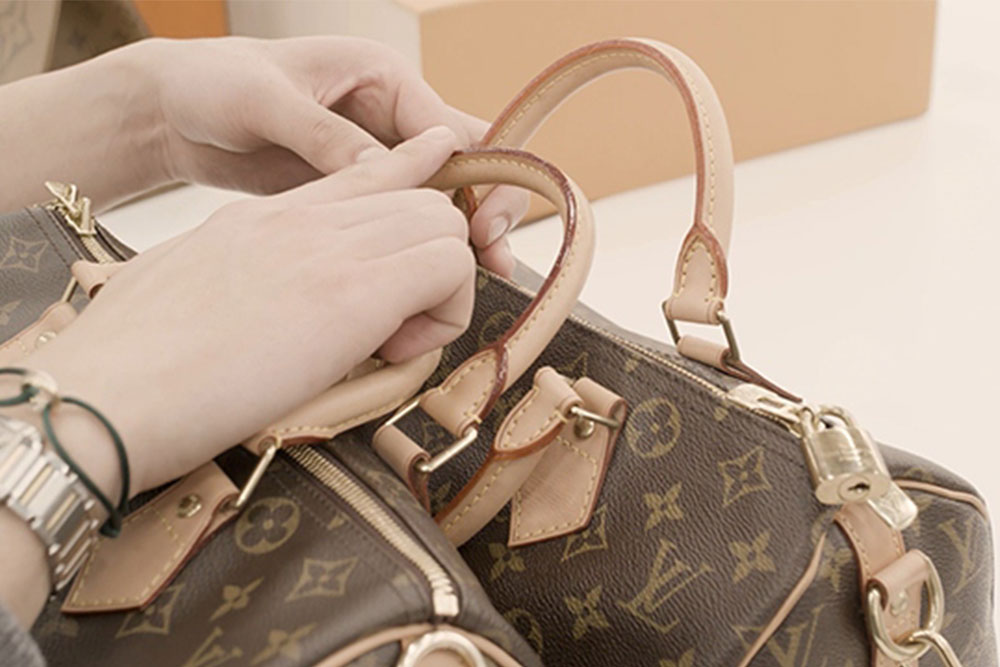
- Third-Party Repairs: If a local cobbler replaces a zipper, restitches a handle, or replaces the piping, they are introducing non-original materials. They might use a generic zipper instead of branded hardware, or a slightly different thread weight.
- Dyeing and Painting: Some owners dye a bag to hide stains or change the color entirely. Dye can clog the grain of the leather, fill in heat stamps, and change the texture of the material.
When an item has been significantly altered or “Frankensteined” with non-original parts, it is no longer purely the product of the original brand. In these cases, items that cannot be authenticated are often rejected because the original brand standards no longer apply to the modified product. We cannot authenticate the work of a local cobbler, only the work of the luxury house.
4. “Superfakes” with Inconclusive Flaws
Counterfeiters are getting better. We now see “superfakes” that use high-quality leather and real metal hardware. Sometimes, an item sits right on the fence. It might have 95% of the correct features, but one tiny detail—perhaps the slope of a font or the feel of a handle—feels “off.”
However, “off” isn’t enough for a formal determination of inauthenticity if the deviation could potentially be a manufacturing anomaly. Brands do make mistakes; quality control isn’t perfect. If an item falls into a zone where it could be a very good fake or a factory flaw from the brand, an ethical authenticator will decline to make a definitive judgment rather than risk calling a real bag fake (or vice versa).
5. Missing Photos or Poor Image Quality
Sometimes, the barrier isn’t the item itself, but the evidence provided. We conduct our services virtually using photos. If a client cannot provide clear, high-resolution images of the required angles—perhaps because they don’t have the item in hand or their camera is poor—we cannot proceed.
While this is usually fixable by asking for new photos, there are times when the item is constructed in a way that prevents photographing key areas (e.g., a date code hidden deep inside a tight pocket that cannot be exposed without damaging the bag). If we can’t see it, we can’t authenticate it.
The Implications for Buyers
So, you’ve bought an item, and the authenticator says, “Unable to render an opinion.” What does this mean for you?
The Refund Dilemma
This is a tricky spot. If you bought an item on a platform like eBay, Poshmark, or Mercari, you typically need proof that an item is not as described (i.e., fake) to get a return. An “inconclusive” result is not the same as a “fake” result.
- Inauthenticity Certificate: This says, “We have determined this is counterfeit.” This wins disputes.
- Inconclusive Result: This says, “We don’t know.” This typically does not trigger a forced return on many platforms.
However, it serves as a massive red flag. If an expert can’t verify it, you should likely treat it as a risk. If the seller has a return policy, use it immediately. If the item was sold as “excellent condition” but is so worn it can’t be authenticated, you may have a claim based on the condition description rather than authenticity.
Resale Value Plummets
If you keep the item, understand that its resale value is compromised. Smart buyers want proof. If you list the item later and cannot provide a certificate, you will likely have to sell it at a steep discount. You essentially own an item that exists in a permanent state of questionability.
The Implications for Sellers
For sellers, an inability to authenticate can be a business nightmare. You might be 100% sure the bag is real because you bought it yourself 15 years ago. But if the date code has rubbed off, the market doesn’t care about your memory; it cares about proof.
Loss of Marketability
Without a certificate, you are limited in where you can sell.
- Major Consignment Shops: Sites like The RealReal or Fashionphile may reject the item if they cannot verify it internally.
- Savvy Buyers: Experienced collectors will pass on items that lack clear identifiers.
Risk of Disputes
If you sell an item that cannot be authenticated, you are opening yourself up to future headaches. A buyer might purchase it, try to get it authenticated themselves, receive an “inconclusive” or “fake” result from another service, and file a chargeback. Selling unverifiable items is a high-risk strategy.
How Pro Authenticators Handles These Cases
At Pro Authenticators, our reputation is built on trust and accuracy. We understand that receiving an “unable to authenticate” result is disappointing, but we believe transparency is the best policy.
Our Review Process
If one of our authenticators is unsure, the item doesn’t just get rejected immediately. It often goes to a second or third senior authenticator for a “roundtable” review. We leverage the collective knowledge of our team. We check our internal databases and consult colleagues who specialize in specific eras or models.
Only after this exhaustive review do we issue an inconclusive status. We want to be sure that the limitation lies with the item, not with us.
Refund Policy for Inconclusive Items
We believe in fair business practices. If we cannot provide the service you paid for—a definitive opinion—due to the nature of the item, we handle this on a case-by-case basis. While we invest time and expertise into every review, we strive to ensure our clients feel treated fairly.
If the issue is simply poor photos, we will work with you to get better ones. If the issue is that the item is missing parts or is too damaged, we will explain exactly why we cannot proceed. This explanation is often valuable in itself, as it educates you on what to look for in the future.
You can learn more about our different service tiers and policies on our Services & Pricing page. We offer various options, including verbal opinions and formal certificates, and we can guide you on which is best if you suspect an item might be problematic.
What Should You Do Next?
If you find yourself with an item that cannot be authenticated, don’t panic. Here is a step-by-step guide on how to handle the situation.
For Buyers:
- Contact the Seller: Explain that professional authenticators could not verify the item due to missing codes or damage. Ask for a return based on the fact that the item’s authenticity is unverifiable.
- Check the Return Policy: If the store or platform allows returns for “any reason” within a certain window, initiate the return immediately. Do not mention “fake” if you don’t have proof; just return it.
- Seek a Second Opinion (Cautiously): You can try another service, but be honest about the condition. If Pro Authenticators couldn’t verify it due to a missing date code, it is unlikely another reputable service will be able to magic one out of thin air.
- Accept the Risk: If you love the bag and the price was low, you might decide to keep it as a “use it and abuse it” bag, knowing it has no resale value.
For Sellers:
- Disclose Everything: If you list the item, be brutally honest. “Date code has worn off due to age.” “Lining has been replaced.” Transparency builds trust and prevents returns.
- Lower the Price: You cannot command top dollar for an item with an identity crisis. Price it accordingly to reflect the risk the buyer is taking.
- Sell as “As Is”: Make it clear that the sale is final and that the item is being sold without a certificate.
- Re-evaluate Your Sourcing: If you are sourcing inventory to resell, learn from this. Avoid buying items with missing codes, severe damage, or obvious alterations. These are bad investments.
The “Grey Market” of Altered Goods
There is a growing niche of “upcycled” luxury goods—authentic canvas used to make keychains, watch bands, or patched-up bags. It is important to note that Pro Authenticators services generally do not cover these items.
Once a Louis Vuitton bag has been cut up and sewn into a wallet by a crafter on Etsy, it is no longer a Louis Vuitton product. It is a handmade product using Louis Vuitton materials. We cannot authenticate the craftsmanship of the Etsy seller. We can perhaps say the canvas looks real, but we cannot issue a certificate for the item itself. This distinction is vital for managing expectations.
Why Integrity Matters More Than a Verdict
In an industry rife with fraud, the most valuable asset an authentication company has is its integrity. It would be easy for a less scrupulous company to guess—to say “Authentic” just to make a customer happy, or “Fake” just to end a dispute.
But a guess is dangerous. If we certify a fake as real, we hurt the buyer and the market. If we condemn a real bag as fake, we hurt the seller. When the evidence isn’t there, the only honest answer is “I don’t know.”
At Pro Authenticators, we stand by our strict standards. Our clients trust us because we don’t compromise. When you receive a Certificate of Authenticity from us, you know it is backed by verifiable proof, not guesswork. And when we tell you an item cannot be authenticated, we are saving you from relying on a false certainty.
Our commitment to accuracy is reflected in the feedback from our community. You can read about how we’ve helped thousands of clients navigate these complex situations on our reviews page.
Conclusion: Navigating Uncertainty with Confidence
The world of luxury goods is complex. Materials age, repairs happen, and sometimes, the proof of origin is lost to time. While an “unable to authenticate” result is never the desired outcome, it is a reality of the secondary market.
Understanding why this happens empowers you. It helps you make smarter buying decisions—checking for date codes before you pay, avoiding heavily modified items, and asking for clear photos. It helps sellers manage their inventory better, avoiding items that will become liabilities.
If you are unsure about an item, let us take a look. Even if the result is inconclusive, our expert analysis can provide clarity on the condition and potential issues of the bag. We are here to help you navigate the luxury market safely, one bag at a time.
Whether you need a quick verbal opinion or a full certificate for a pristine piece, Pro Authenticators is your partner in luxury verification. Visit our Services & Pricing page to start your authentication today.
Louis Vuitton Authentication made easy!
You are unsure if you are looking at an authentic or fake LV? We offer the quickest and the most accurate way to get it authenticated for your peace of mind.
Authenticate Now