The world of pre-owned luxury is filled with excitement, discovery, and unfortunately, a great deal of misinformation. For Louis Vuitton enthusiasts, navigating the resale market can feel like walking through a minefield of myths and half-truths. A well-meaning friend tells you, “If the LV logo is cut off, it’s fake.” A forum post confidently declares, “All real bags have a date code.” You read that a seller’s original receipt is ironclad proof of authenticity.
These statements, while common, are dangerously inaccurate. Relying on these widespread Louis Vuitton authenticity myths is one of the fastest ways to end up with a counterfeit bag and a lighter wallet. The truth is, authenticating a Louis Vuitton item is a complex science that requires expert knowledge, not a simple checklist of “rules” that are often outdated or just plain wrong.
Counterfeiters thrive on this misinformation. They know what buyers look for, so they create fakes that tick these mythical boxes, luring in unsuspecting shoppers who think they’ve done their homework.
In this guide, we will systematically debunk the most common and damaging myths about LV authenticity. By understanding what isn’t true, you will be better equipped to focus on what actually matters in luxury item verification and protect yourself from costly mistakes.
Myth 1: “A Receipt Guarantees Authenticity”
This is perhaps the most dangerous myth of all because it feels so logical. If a seller provides the original receipt, dust bag, and box, the item must be real, right?
The Reality: Receipts, Boxes, and Dust Bags Are Easily Faked or Misused.
Think about it: it is far easier and cheaper to forge a piece of paper or a simple cloth bag than it is to replicate a complex, high-end handbag. Counterfeiters have mastered the art of creating fake receipts that look identical to the real thing, right down to the store address and sales associate’s name.
Furthermore, a common tactic is the “bait and switch.” A scammer will use a real receipt from a genuine purchase but sell you a counterfeit bag. They might have bought a real bag, kept it, and are now using its receipt to sell multiple fakes. Without verifying the bag itself, the receipt is just a piece of paper.
What to Look For Instead:
Always authenticate the item itself, independent of any accessories or paperwork it comes with. While having the original packaging is a nice bonus for a collector, it should never be used as a primary factor in your authenticity assessment. The bag tells the story, not the box it came in.
Myth 2: “The LV Logo is Never Cut by a Seam”
This is a classic “rule” that has been repeated for decades. The idea is that Louis Vuitton has so much respect for its iconic Monogram that it would never allow the “LV” initials to be sliced by a seam.
The Reality: The LV Logo Can Be Cut, Depending on the Bag Style.
While it is true that Louis Vuitton’s artisans are masters of pattern placement, this rule is a massive oversimplification. For many bag styles, especially those crafted from a single, continuous piece of canvas like the Speedy, it is impossible to avoid cutting the monogram somewhere.
On a classic Speedy, for example, the canvas wraps around the entire body. This results in the monogram being upright on one side of the bag and upside down on the other. On the sides and bottom, parts of the monogram, including the LV initials, will inevitably be cut by the seams.
However, there is a kernel of truth here. On most styles, LV will avoid placing a cut-off logo in a very prominent, focal area like the direct center of a front flap. But on the sides, back, or less visible areas? It’s perfectly normal.
What to Look For Instead:
Focus on the symmetry and alignment of the pattern as a whole, rather than just the LV initials. For example, the pattern should align perfectly where two pieces of canvas meet. On a Neverfull, count the number of monogram squares leading up to the side seams—it should be consistent with known authentic models. This level of detail is a better indicator than a simple “no cut” rule.
Myth 3: “All Authentic Louis Vuitton Bags Have a Date Code”
For years, the date code was the first thing savvy shoppers looked for. It was seen as the ultimate proof of an item’s origins. If a bag didn’t have one, it was immediately labeled a fake.
The Reality: Not All Authentic LV Items Have Date Codes.
This myth is false for several key reasons:
- Pre-1980s Items: Louis Vuitton did not use date codes before the early 1980s. Authentic vintage pieces from this era will not have one.
- Worn-Off Codes: On many bags with Alcantara or microfiber linings, the date code is simply stamped onto the fabric. With years of use, friction, and cleaning, this stamp can completely rub off, becoming faint or disappearing entirely. This is extremely common in well-loved bags.
- The Microchip Era: In March 2021, Louis Vuitton began phasing out date codes and replacing them with embedded RFID microchips. Any bag manufactured after this date will not have a date code.
Insisting that a 2023 bag must have a date code is a surefire way to misjudge an authentic item. Conversely, counterfeiters know buyers look for date codes, so they put them in every fake bag, often using logically correct codes they copied from a real item.
What to Look For Instead:
Understand the era of the bag you are looking at. If it’s a vintage piece, a faded or missing code might be normal. If it’s a brand new model, the absence of a code is expected. A perfect date code on a modern fake proves nothing. Focus on the physical craftsmanship: the stitching, hardware, and material quality.
Myth 4: “The Stitching Should Be Perfect”
Louis Vuitton is known for its exceptional craftsmanship, leading many to believe that every single stitch must be flawless and perfectly straight, like it was made by a machine.
The Reality: Louis Vuitton Bags Are Handmade, and Minor Imperfections Can Exist.
While LV’s quality control is among the best in the world, the bags are stitched by human artisans, not robots. As such, you might find a stitch that is slightly out of place, especially in a difficult-to-reach corner or on a curve. This doesn’t automatically mean the bag is fake.
Counterfeiters often use machines that produce perfectly uniform, but “dead,” stitching. Authentic LV stitching has a certain character. It’s strong, consistent, and often has a slight angle. The thread itself is a specific shade of yellow and is coated in a resin that gives it strength and a subtle sheen. Fakes often get the thread color or thickness wrong.
What to Look For Instead:
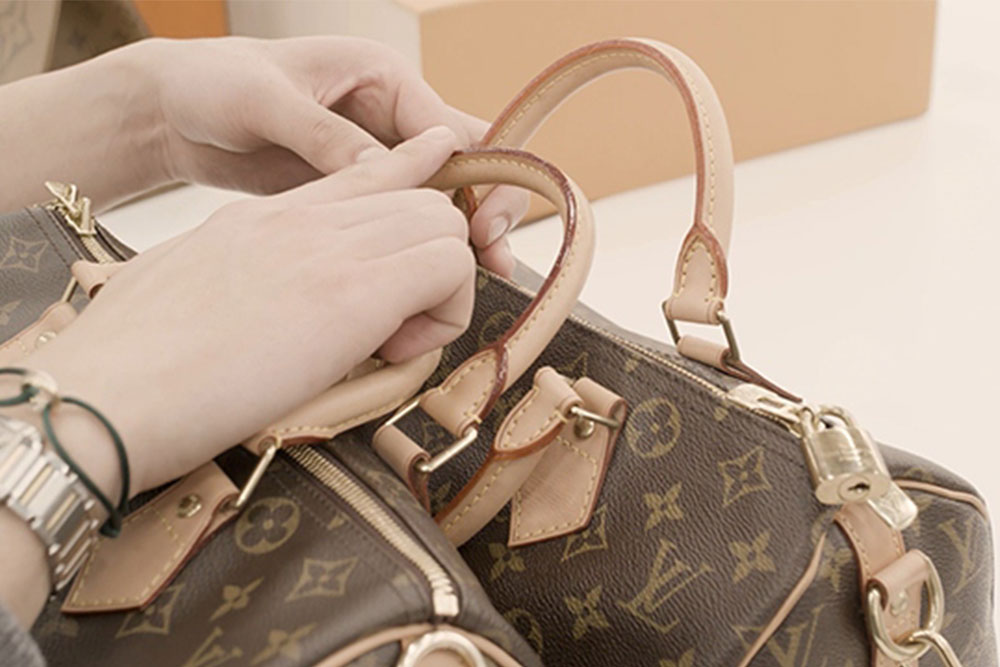
Look at the overall quality, consistency, and type of stitching, not just perfection. A key area to inspect is the handle’s chape (the part that connects the handle to the bag). Authentic bags have a very specific number of stitches here (e.g., five stitches across the top on a Speedy). A fake might have four or six. The pattern of the stitching is more important than finding one slightly askew stitch.
Myth 5: “The Hardware is Solid Brass, So It Shouldn’t Tarnish”
Many believe that because Louis Vuitton uses high-quality hardware, it shouldn’t show any signs of aging, tarnishing, or peeling.
The Reality: Hardware is Plated and Will Show Wear Over Time.
Most modern Louis Vuitton hardware is brass with a gold-tone plating. It is not solid gold. Over time, and with regular use, this plating can wear down, chip, or tarnish. Areas that experience high friction, like zipper pulls, D-rings, and clasps, will show this wear first.
In fact, the way the hardware ages can be a good indicator of authenticity. Authentic plating tends to wear off gracefully, revealing the brass underneath. On many fakes, the “gold” hardware is just cheap metal painted gold. This paint will chip or flake off, revealing a silvery, pot-metal base, or it might turn a greenish, oxidized color. Vintage pieces with real brass hardware will develop a beautiful, deep patina, not a cheap-looking tarnish.
What to Look For Instead:
Analyze the quality of the hardware’s engraving and finish. The “Louis Vuitton” text on a zipper pull should be crisp, clear, and well-defined, not blurry or shallow. The weight and feel of the hardware should be substantial, not light and tinny. A little wear on an older bag is a sign of a life well-lived, not a sign of a fake.
Myth 6: “The ‘O’ in Louis Vuitton Must Be Perfectly Round”
This is a very specific font-related myth that has gained a lot of traction. The idea is that the letter ‘O’ in the heat stamp is a perfect circle on authentic bags.
The Reality: The ‘O’ is Very Round, But Its Shape Varies Slightly by Year and Factory.
This myth is close to the truth but lacks nuance. The “O” in an authentic heat stamp is indeed very wide and round, much more so than a standard “O” in a typeface like Times New Roman. However, to call it a “perfect circle” is an exaggeration. Furthermore, the exact shape, font, and spacing of the letters on the heat stamp have evolved over the years.
Counterfeiters have caught on to the “round O” rule and now replicate it. However, they often get other details wrong. They might make the “L” have a long leg, or the two “T”s in VUITTON might be too far apart (they should be very close, almost touching).
What to Look For Instead:
Examine the entire heat stamp as a whole. Look at the font, the spacing between letters, the depth of the impression, and the alignment. It should be clean, crisp, and evenly pressed into the leather. Relying on a single letter is a flawed strategy. An expert looks at the entire typographical signature, not just one character.
Myth 7: “You Can Authenticate a Bag from Just One Photo”
In the age of instant gratification, people often want a quick yes/no answer based on a single photo from an online listing.
The Reality: Proper Authentication Requires Multiple, High-Quality Photos of Key Areas.
It is absolutely impossible to definitively authenticate a Louis Vuitton bag from one blurry photo of the front. As our many happy clients noted in their Reviews, providing a full suite of clear photos is the key to a fast and accurate verdict.
A professional authenticator needs to see:
- Front, back, sides, and base of the bag.
- A clear, straight-on shot of the heat stamp.
- A readable photo of the date code (if applicable).
- Close-ups of the hardware, including zipper pulls, rivets, and clasps.
- A shot of the interior lining and stitching details.
Each photo provides a piece of the puzzle. Without all the pieces, the authenticator is working blind. Counterfeiters often post only flattering photos that hide the bag’s flaws.
What to Look For Instead:
If a seller is unwilling to provide additional, clear photos of the specific areas you request, consider it a major red flag. A transparent seller with a genuine item has nothing to hide. Always insist on seeing the details before you buy, and then submit that full photo set for a professional opinion.
Conclusion: Don’t Be a Victim of Myths—Trust the Experts
The common thread in all these debunked myths is that they offer a tempting shortcut. They promise an easy, black-and-white way to tell real from fake. But in the world of high-end luxury and even higher-end counterfeits, there are no shortcuts. Every “simple rule” has an exception, and every myth is a tool that counterfeiters exploit.
Relying on this flawed folklore will not protect you. The only way to be certain is to have your item reviewed by a professional who has spent years studying the brand, tracking fakes, and understanding the nuances that separate a genuine article from a convincing copy.
At ProAuthenticators, we’ve dedicated ourselves exclusively to Louis Vuitton. We don’t rely on myths; we rely on a massive database of authentic and counterfeit examples and years of hands-on experience. We analyze every detail, from the canvas grain to the hardware engravings, to give you a verdict you can trust.
Before you spend your hard-earned money on a pre-loved Louis Vuitton item, invest in certainty. Check out our straightforward Services & Pricing and let an expert guide you. Don’t let a myth lead you to a mistake.
Louis Vuitton Authentication made easy!
You are unsure if you are looking at an authentic or fake LV? We offer the quickest and the most accurate way to get it authenticated for your peace of mind.
Authenticate Now