When you invest in a luxury item, you expect certain assurances. A beautiful box, a soft dust bag, and perhaps a small, credit-card-sized certificate of authenticity. This plastic card, often complete with a serial number and a gold foil stamp, feels like official proof of your purchase’s legitimacy. Brands like Chanel and Prada have made them a standard part of the luxury experience.
So, when you unbox your first Louis Vuitton, you might search for this card in vain. You will find small tags detailing the material and a receipt, but there will be no Louis Vuitton authenticity card. This isn’t an oversight. Louis Vuitton has never, in its entire history, issued such cards.
This deliberate choice often causes confusion and opens the door for counterfeiters to exploit unsuspecting buyers. Why does a brand so dedicated to quality and heritage forego what seems like a simple security measure? And more importantly, what does this mean for you as a buyer or seller in the pre-loved market?
This guide explains exactly why Louis Vuitton has no authenticity cards, how fakes use this fact to their advantage, and why this policy makes professional authentication an indispensable part of any transaction.
The Myth of the Authenticity Card
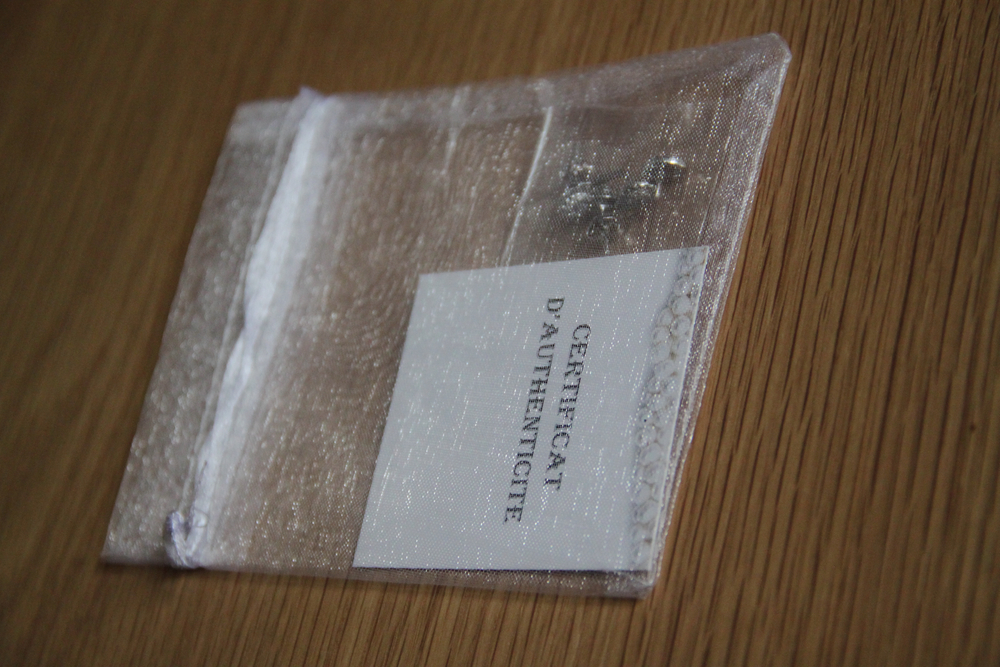
The most crucial fact to burn into your memory is this: If you are considering a Louis Vuitton bag and the seller proudly presents a plastic authenticity card as proof of legitimacy, the bag is unequivocally fake. No exceptions.
Counterfeiters create these cards for one reason: to prey on the expectations of uninformed buyers. They know that many consumers associate luxury goods with these little plastic certificates. By providing a convincing-looking card—often yellow or black, with the “Louis Vuitton” name in what appears to be the correct font—they create a false sense of security.
An unsuspecting buyer sees the card and thinks, “Great, it comes with proof.” In reality, the card itself is the most glaring proof of a counterfeit. Authentic Louis Vuitton items come with a few small paper tags—a cream-colored one stating the material (e.g., “Monogram Canvas”) and sometimes a barcoded sticker on the receipt—but never a plastic, wallet-sized card declaring authenticity.
Why Louis Vuitton Opted Out of Authenticity Cards
Louis Vuitton’s decision not to use authenticity cards is not an accident or a sign of weakness. It is rooted in a core philosophy about where authenticity truly lies. The brand believes that the proof of authenticity is the item itself—its impeccable craftsmanship, high-quality materials, and flawless details.
1. Confidence in Craftsmanship
From Louis Vuitton’s perspective, the bag is its own certificate. The brand has spent over 160 years perfecting its materials, hardware, and construction techniques. The precise stitch count, the specific weight of the brass hardware, the unique texture of the coated canvas, and the perfection of the heat stamp are all markers of authenticity. They believe that these intricate details, which are incredibly difficult and expensive to replicate perfectly, are a far more reliable indicator of a genuine product than a piece of plastic that can be mass-produced for pennies. An authenticity card can be faked with ease; the soul of a handcrafted item cannot.
2. The Inherent Flaw in Cards
Louis Vuitton recognized early on a fundamental security flaw with authenticity cards: they are separate from the item.
- Cards Can Be Lost or Stolen: A real card could be separated from its original bag and sold alongside a high-quality fake. A buyer would have an authentic card but a counterfeit product.
- One-to-Many Forgery: A single fake card design can be printed by the thousands and paired with thousands of different fake bags. The card itself becomes a tool for mass deception.
- Lack of Dynamic Information: A plastic card is a static object. It cannot be updated or tracked. It provides no information about the item’s history, repair records, or ownership.
By refusing to issue cards, Louis Vuitton forces the focus back onto the product itself. They are, in effect, saying, “Don’t trust a piece of paper. Trust the product.”
3. A Focus on the Client Relationship
Louis Vuitton maintains a detailed digital history of every item sold in its boutiques. When you buy a bag directly from them, a client profile is created that links you to that specific purchase. This internal record is their true “certificate.” It’s a secure, private, and unforgeable log of the item’s origin.
The introduction of microchips in 2021 further solidified this approach. These invisible RFID chips, embedded within the bag’s lining, give each item a unique digital serial number linked to LVMH’s private blockchain. This is a far more sophisticated and secure system than any physical card could ever be. It allows the company to track an item from production to point of sale, creating a digital provenance that is impossible to forge.
The Impact on the Pre-Loved Market
While Louis Vuitton’s logic is sound, their “no card” policy creates a significant challenge for the secondary market. Without an easy, official-looking document to rely on, how do buyers and sellers establish trust? This void is where knowledge, diligence, and professional expertise become paramount.
The Seller’s Dilemma
If you are selling an authentic Louis Vuitton bag, you face the challenge of proving its legitimacy to a skeptical audience. You can’t just wave a card in the air. You must:
- Provide High-Quality Photos: Clear, detailed images of the heat stamp, date code (if applicable), hardware engravings, stitching, and materials are essential. These photos are the evidence a potential buyer or an authenticator will use.
- Build Trust Through Transparency: Be prepared to answer questions about the bag’s history. Where and when did you buy it? Do you have the original receipt? Being open and honest is key.
- Invest in Pre-Authentication: The most effective way to eliminate doubt is to have the item professionally authenticated before you list it. Including a certificate of authenticity from a reputable third-party service in your listing makes your item instantly more credible and desirable. It justifies your asking price and attracts serious, confident buyers.
The Buyer’s Burden
For buyers, the absence of Louis Vuitton authenticity cards means the responsibility of verification falls squarely on their shoulders. You cannot take a seller’s word for it. You must become a detective.
- Know the Red Flags: Your first line of defense is knowing the tell-tale signs of a fake. As we’ve established, the presence of an authenticity card is the biggest red flag of all.
- Scrutinize the Listing: Do not be swayed by a low price or a sob story from the seller. Examine the photos provided. Are they blurry or stock images? A reputable seller will always provide clear, original photos of the actual item for sale.
- Never Rely on a Receipt Alone: Just like authenticity cards, receipts can be easily forged. A convincing-looking receipt can be printed from a home computer. It can add to the story, but it is not definitive proof.
Why Professional Authentication Is Not Optional
In a market where the brand itself provides no portable proof of purchase, and where counterfeiters are masters of deception, third-party authentication is not a luxury—it is a necessity. It is the bridge of trust that allows the multi-billion dollar pre-loved Louis Vuitton market to function.
The Expertise You Are Paying For
Professional authenticators are specialists who have spent years studying the intricacies of Louis Vuitton. They have access to extensive databases of authentic items from different eras, allowing them to compare a submitted item against known genuine examples.
Their evaluation goes far beyond a simple checklist. They understand that:
- Fonts on heat stamps changed slightly over the decades.
- Certain zipper manufacturers were only used for specific models during specific years.
- The placement of a date code or microchip varies by bag style and size.
- The specific hue of the red edge paint was different in the 1990s than it is today.
This granular, expert-level knowledge is something that cannot be gained from watching a few online videos. When you pay for an authentication service, you are paying for this accumulated experience and the confidence it provides.
The Power of a Certificate
A certificate from a trusted authenticator is the closest thing the resale market has to an official document.
- Peace of Mind for Buyers: It provides a definitive “yes” or “no,” allowing you to complete your purchase with confidence or walk away from a costly mistake.
- Crucial for Disputes: If you purchase a bag online and it turns out to be fake, platforms like PayPal or your credit card company will require expert proof to process your claim and get your money back. A simple “I think it’s fake” is not enough. A formal certificate of non-authenticity is the evidence that wins disputes.
- Empowerment for Sellers: A certificate helps your listing sell faster and often for a higher price. You are removing the single biggest point of friction for the buyer: the fear of being scammed.
Investing in authentication is surprisingly affordable, especially when compared to the potential loss. You can explore a variety of options by looking into services and pricing from specialized companies. This small upfront cost is an insurance policy against a devastating financial loss. The trust these services have built within the community is evident; checking their reviews shows how many buyers and sellers rely on them to transact safely.
What to Look For Instead of an Authenticity Card
Since you now know not to look for a card, what should you focus on? Here is a quick refresher on the true hallmarks of an authentic Louis Vuitton item.
1. The Quality of the Materials
Feel the bag. Authentic canvas is textured and durable, not smooth and plastic-like. The Vachetta leather should be a pale, matte beige if new, or have developed a rich, even honey patina if used. It should never be bright orange or feel sticky.
2. The Precision of the Hardware
Examine the zipper pulls and clasps. They should feel heavy and substantial. The engravings must be crisp, clean, and use the correct font (a perfectly round “O,” a short-tailed “L”).
3. The Perfection of the Stitching
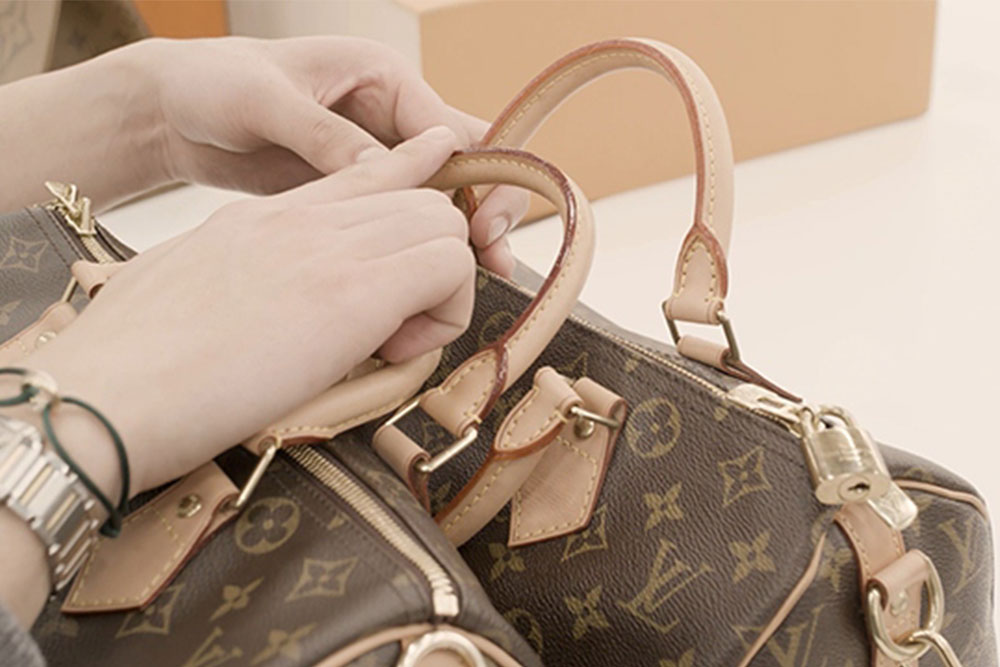
Look at the stitches on the handle tabs. They should be neat, even, and slightly angled. The color should be a mustard yellow, not a bright lemon yellow.
4. The Accuracy of the Stamps
Find the “LOUIS VUITTON PARIS made in…” heat stamp. It should be perfectly centered, with clear, evenly spaced letters. Scrutinize the font. This is often where high-quality fakes fail.
5. The Logic of the Date Code or Presence of a Microchip
For bags made before March 2021, a date code should be present. Its factory letters must match the “Made in” stamp, and the date should align with the style’s release period. For bags made after that date, there should be no date code but an embedded (and scannable by NFC readers) microchip. An item claiming to be new but having a date code is a major red flag.
Conclusion: Trust the Craft, Not the Card
The absence of Louis Vuitton authenticity cards is a core part of the brand’s identity. It is a statement of confidence in their own craftsmanship and a rejection of security measures that are easily forged. While this policy protects the brand’s internal processes, it places a heavy burden of responsibility on consumers in the secondary market.
The key takeaway is simple: a Louis Vuitton authenticity card is a definitive sign of a fake. True authenticity lies in the hundreds of tiny, perfect details that make up the bag itself.
Learning these details is empowering and can help you spot obvious fakes. However, with “super fakes” becoming more sophisticated every year, the only way to be 100% certain is to rely on the trained eye of a professional. Before you buy or sell your next Louis Vuitton piece, make professional authentication a non-negotiable step in your process. It is the single best way to protect your investment, ensure peace of mind, and honor the true heritage of a brand that lets its quality speak for itself.
Louis Vuitton Authentication made easy!
You are unsure if you are looking at an authentic or fake LV? We offer the quickest and the most accurate way to get it authenticated for your peace of mind.
Authenticate Now