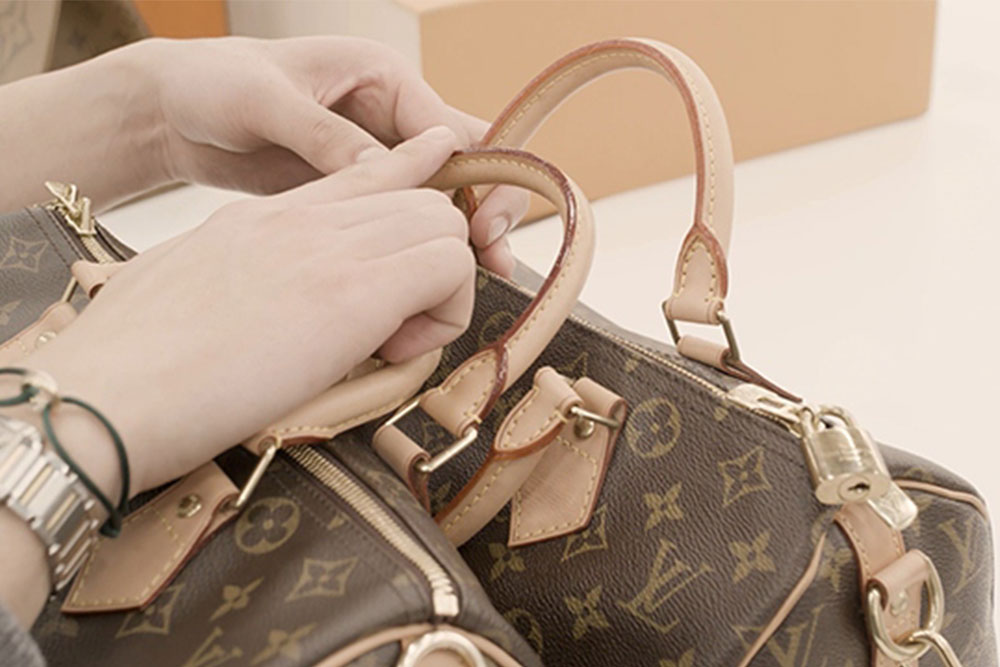
Luxury handbags and accessories are more than just fashion statements; they are significant financial investments. As the resale market for these high-end goods explodes, so does the sophistication of counterfeiters. Gone are the days of obvious “super fakes” with glaring stitching errors or cheap hardware. Today, counterfeiters are producing items that can fool even the untrained eye, making rigorous authentication processes absolutely critical.
One of the most significant advancements in the battle against counterfeits is the introduction of microchip technology (often RFID or NFC) by major luxury houses like Louis Vuitton, Chanel, and others. This shift has changed how professional authenticators work. You might have noticed that for certain newer models, we now require evidence of a microchip for confirmation. This isn’t just a bureaucratic hurdle; it is a vital step in ensuring 100% accuracy.
In this guide, we will dive deep into why microchipped items are becoming the new standard for authentication on specific models, how the technology works, and why it offers a layer of security that traditional date codes simply cannot match.
The Evolution of Luxury Authentication: From Date Codes to Microchips
For decades, luxury enthusiasts relied on date codes, serial numbers, and blind stamps to verify the age and origin of their items. A date code on a Louis Vuitton bag, for example, could tell you the week and year it was made, along with the factory location. While helpful, these codes had a major flaw: they were never intended to be unique identifiers for a single bag. They were simply production markers.
The Limitations of Traditional Date Codes
Counterfeiters quickly learned to replicate these codes. A fake bag could easily carry a legitimate date code, making it appear authentic on the surface. Furthermore, as bags age, hot-stamped codes can fade or become illegible, leading to inconclusive results during authentication.
The luxury industry needed a more robust solution—something that could uniquely identify an item and be much harder to replicate. Enter the microchip.
What Is a Microchip in Luxury Goods?
When we talk about microchips in luxury items, we are generally referring to Radio Frequency Identification (RFID) or Near Field Communication (NFC) tags. These are tiny chips embedded within the lining or material of the product. They are invisible to the naked eye and do not alter the aesthetic of the item.
Unlike a stamped code, a microchip contains digital data. When scanned with a specific device or app, the chip transmits information that can be cross-referenced with the brand’s internal database. This digital signature is far more complex to forge than a physical stamp.
Why We Require Microchips for Specific Models
If you are submitting a newer model item for authentication, particularly from brands like Louis Vuitton (which began phasing out date codes in favor of chips around March 2021) or Chanel (which introduced metal plates with chips to replace serial stickers), you may be asked to locate and scan the microchip.
We require this for several crucial reasons.
1. Enhanced Accuracy and Error Reduction
The primary goal of any professional authentication service is accuracy. We cannot afford to be wrong. When an item is released during the “microchip era,” the presence of that chip is a non-negotiable part of its identity.
If a bag is supposed to have a chip but doesn’t, it is an immediate red flag. Conversely, if a bag has a chip, reading the data on that chip allows us to verify that the digital information matches the physical attributes of the bag.
By requiring the microchip scan, we are effectively adding a “digital fingerprint” analysis to our physical inspection. This dual-layer approach drastically reduces the margin for error.
2. Combating “Super Fakes”
“Super fakes” are high-quality counterfeits that use real leather, high-grade hardware, and precise stitching. They are designed to deceive. However, replicating the encrypted data of a luxury brand’s microchip is significantly harder than sourcing good leather.
While counterfeiters have started putting dummy chips in fake bags to fool scanning apps, the data on those chips often reveals the deception. A fake chip might scan but lead to a dead link, display gibberish code, or show information that doesn’t align with the factory origin. Requiring the chip allows our experts to analyze not just the presence of technology, but the validity of the data it holds.
3. Verifying Production Timelines
Transition periods can be tricky. For example, there was a window where Louis Vuitton produced bags with both a date code and a microchip, and later, bags with only a microchip. Knowing exactly where a specific item falls in this timeline is essential.
If a client submits a bag that appears to be from a 2022 collection but lacks a microchip, we know immediately that something is wrong. Our requirement ensures that the item’s physical construction aligns perfectly with the brand’s manufacturing timeline.
If you are looking to get your luxury item authenticated, check out our Services & Pricing to see which tier best fits your needs, especially for these high-tech models.
How Microchip Technology Works in Authentication
Understanding the “why” requires understanding the “how.” You don’t need to be a tech wizard to understand the basics of how these chips protect your investment.
RFID vs. NFC: The Basics
- RFID (Radio Frequency Identification): This uses electromagnetic fields to automatically identify and track tags attached to objects.
- NFC (Near Field Communication): A subset of RFID, this technology allows two devices (like your phone and the bag’s chip) to communicate over a short distance.
Most modern luxury microchips are NFC-enabled, meaning they can often be detected by smartphones using specific apps, though the encrypted data is usually only fully readable by the brand’s proprietary scanners.
The Scanning Process
When an authenticator or a client scans a bag, the reader sends a signal to the chip. The chip wakes up and sends back its stored data. This data usually includes:
- A unique identifier (UID)
- Production data (factory, week, year)
- Model information
Data Analysis
This is where the human element remains vital. A scanner might tell you a chip exists, but it takes a professional to interpret the context. Does the factory code in the chip match the physical characteristics of the bag? Does the production week align with when this specific colorway was released?
Authenticators use this data as a powerful cross-referencing tool. If the digital data says the bag was made in France, but the physical “Made in” stamp says Spain, we have a problem.
Brands Leading the Charge: Louis Vuitton and Chanel
While many brands are exploring this technology, two giants have made microchips a central part of their modern production: Louis Vuitton and Chanel.
The Louis Vuitton Shift
Louis Vuitton began a massive transition in March 2021. They started phasing out the physical date codes stamped on leather tabs or lining. Instead, new items now contain an RFID chip embedded in the lining.
Why this matters for you: If you are buying or selling a Louis Vuitton piece made after March 2021, you should expect a microchip. If you find a physical date code on a bag that is clearly from a 2023 collection, it is likely a counterfeit.
The challenge with Louis Vuitton chips is that they are invisible. You cannot see them. You must use a scanning app to locate them. This is why we ask clients to perform this scan as part of the submission process for newer items. It confirms the bag’s identity in a way photos alone cannot.
The Chanel Metal Plate
Chanel took a slightly different, more visible approach. They replaced their famous authenticity card and hologram sticker system with a metal plate attached directly to the inside of the bag. This plate features the Chanel CC logo and an alphanumeric code.
While this isn’t a hidden chip in the same way LV’s is, it serves a similar purpose: it binds the identity of the bag to a permanent, hard-to-replicate fixture. The code on the metal plate is unique to that specific bag.
Authenticating these new Chanel bags requires clear, high-resolution images of this metal plate. The font, spacing, and engraving quality are all tell-tale signs of authenticity.
The Challenges of Authenticating Without Microchips
You might wonder, “Can’t you just look at the stitching and the leather?” Why is the chip so mandatory?
The answer lies in the increasing quality of counterfeits. Relying solely on visual inspection for modern bags creates a risk gap that we are unwilling to accept.
The “Mirror Quality” Problem
Counterfeit manufacturers have access to sophisticated machinery. They can mimic the grain of canvas, the oxidation of brass, and the tint of edge glazing (glazing) with frightening accuracy.
Without the microchip data to corroborate the physical evidence, an authenticator is fighting with one hand tied behind their back. The chip provides a non-visual data point. It is a piece of evidence that exists outside of the aesthetic replication capabilities of most counterfeiters.
Inconclusive Results
Without a microchip scan on a model that requires one, we often have to return an “inconclusive” result. We cannot in good conscience certify an item as authentic if a critical piece of security architecture is missing or unverified.
We strive for definitive answers because we know our clients rely on us for peace of mind and financial security. Our track record speaks for itself—just take a look at our Reviews to see how we’ve helped thousands of clients avoid costly mistakes.
How to Locate and Scan a Microchip
If you are asked to provide microchip data for your authentication, don’t panic. It is a straightforward process.
Tools You Need
You can use a variety of free NFC scanning apps available on the Apple App Store or Google Play Store. Popular options include “NFC Tools” or similar generic scanners.
Locating the Chip in Louis Vuitton Items
The chip is not always in the same spot, which is a security feature in itself. However, common locations include:
- The front or back of the bag, near the bottom.
- Inside the lining of the main compartment.
- Near the interior pocket.
The Scanning Technique
- Open the App: Launch your NFC scanning app.
- Prepare the Item: Ensure the bag is empty so nothing interferes with the signal.
- Slow Movement: Slowly move your phone over the suspected areas. The NFC reader on an iPhone is usually at the top near the camera, while on Androids, it is often in the center of the back.
- Wait for the Beep: When the app detects the chip, it will vibrate or beep and display a set of data or a serial number.
- Screenshot: Take a screenshot of this result to include with your authentication submission.
Note: The app will likely not show you “Louis Vuitton” or secret brand data. It will show a string of characters or a chip type. This is exactly what we need to see.
The Future of Authentication: Blockchain and Beyond
The requirement for microchipped items is just the beginning. The luxury industry is moving toward Digital IDs and blockchain technology.
Digital Passports
Imagine scanning your bag and seeing its entire history: when it was made, who bought it first, and every time it was resold and authenticated. Brands like Aura Blockchain Consortium (founded by LVMH, Prada, and Cartier) are working toward this reality.
This “digital passport” will make the physical microchip even more critical. The chip will be the key that unlocks this digital history. If the physical item doesn’t match the blockchain record, it’s a fake.
Why Professional Authenticators Are Essential
Even with all this technology, the human expert is irreplaceable. Technology can malfunction. Counterfeiters can clone data. A scanner can give a “false positive” if not interpreted correctly.
Professional authentication combines the objective data of the microchip with the subjective expertise of handling thousands of items. We know what a specific leather should smell like, how a zipper should glide, and exactly how the font on a microchip readout should look. It is the synthesis of tech and touch that provides true security.
Counterfeit Prevention: A Shared Responsibility
The fight against counterfeiting requires cooperation between brands, buyers, and authenticators.
- Brands innovate with tech like microchips to secure their supply chain.
- Buyers (you) remain vigilant, asking questions and demanding proof of authenticity.
- Authenticators (us) provide the expertise and verification to bridge the trust gap in the secondary market.
By adhering to requirements like microchip confirmation, you aren’t just jumping through hoops—you are actively participating in a system designed to protect the integrity of the luxury market. You are ensuring that the item you hold retains its value.
Conclusion: Embracing the Tech for Your Protection
The requirement for microchipped items on certain models is not arbitrary. It is a necessary evolution in response to a changing market. As counterfeiters get smarter, our verification methods must get stronger.
Microchips provide a layer of immutable data that protects you from fraud. They help verify production timelines, expose high-quality fakes, and ensure that the item in your hand is exactly what it claims to be.
Whether you are a seasoned collector or buying your first luxury handbag, understanding and utilizing this technology is paramount. It ensures that your investment is safe and that the legacy of these beautiful items remains untarnished.
If you have a microchipped item that needs verification, or if you’re unsure if your item should have one, don’t guess. Let the experts handle it. Visit our Services & Pricing page to start your authentication today. And if you want to know why so many trust us with their investments, read what our community has to say in our Reviews.
Authenticity is not just about a brand name; it’s about the truth behind the item. And in the modern world, that truth is often hidden in a tiny microchip.
Louis Vuitton Authentication made easy!
You are unsure if you are looking at an authentic or fake LV? We offer the quickest and the most accurate way to get it authenticated for your peace of mind.
Authenticate Now