You’ve received the luxury bag you ordered online, but something feels off. The excitement of unboxing quickly turns to a sinking feeling of dread. The leather feels wrong, the stitching is uneven, and the hardware seems flimsy. You’ve been sold a counterfeit. After the initial frustration subsides, your next thought is: “How do I get my money back?”
Filing a dispute is the first step, but a successful outcome depends entirely on your preparation. Platforms like PayPal, Poshmark, and your bank have specific procedures for handling these claims. Simply stating “this item is fake” is not enough to secure a refund. You need to build a case, gather evidence, and present it in a way that is clear, professional, and convincing.
This guide will provide you with a detailed, step-by-step roadmap for preparing and submitting your claim. We will cover the essential documentation, best practices for communication, and the critical role of third-party authentication in winning your dispute. Following these steps will transform you from a frustrated victim into a prepared claimant, ready to navigate the process with confidence.
Understanding the Landscape: PayPal, Poshmark, and Banks
While the core principle of a dispute is the same, each entity has its own nuances. Understanding who you are dealing with is the first step in your Poshmark claim preparation or your effort to submit a claim to PayPal.
PayPal: The Neutral Intermediary
PayPal’s Buyer Protection is robust, but it operates on a strict evidence-based system. When you open a “Significantly Not as Described” (SNAD) claim for a counterfeit item, PayPal acts as a referee between you and the seller. They need objective proof to make a decision. They are not luxury experts; they are claim adjusters who need clear, verifiable documents.
Poshmark: The In-House Investigation
Poshmark handles claims through its “Posh Protect” program. Unlike PayPal, where you often deal with the seller directly in the claim, Poshmark’s team investigates behind the scenes. You submit your case to them, they review it, and then they make a ruling. They have an in-house team familiar with authentication, but they still rely heavily on strong evidence from the buyer. You have a very limited window (3 days after delivery) to open a case, so speed is critical.
Banks and Credit Card Companies: The Formal Chargeback
The bank refund process, known as a chargeback, is the most formal of the three. When you dispute a charge with your credit card issuer (Visa, Mastercard, Amex), you are initiating a legal and financial process governed by federal regulations. Banks have high evidentiary standards and will almost always require a written letter or certificate from a qualified third-party expert to reverse a charge for counterfeit goods.
Your Pre-Claim Checklist: Gathering Ammunition Before You Fire
Before you click that “Open a Dispute” button, you need to get your ducks in a row. A well-prepared case submitted from the outset is far more effective than one pieced together in a panic against a tight deadline.
1. Document the Original Listing
Go back to the original sales page and save everything. Take screenshots or print PDFs of:
- The full listing with all photos.
- The seller’s description of the item. Pay close attention to any claims of authenticity (“100% authentic,” “bought from boutique,” etc.).
- The seller’s profile, username, and any return policies.
- The final price you paid, including shipping.
This information creates a baseline. It proves what you were supposed to receive, which you will then contrast with what you actually got.
2. Photograph the Item Extensively
This is your most important task. You need to create a comprehensive photographic record of the item you received. Do not just take a few quick snaps. Act like a crime scene investigator. Your photos should be clear, well-lit, and capture every detail.
Essential Photo Checklist:
- Overall Views: Front, back, sides, top, and bottom of the bag.
- Logos and Heat Stamps: Clear, close-up shots of any brand logos, “Made In” stamps, and embossing.
- Date Code/Serial Number: This is crucial. Use a flashlight if needed to get a crisp, legible photo.
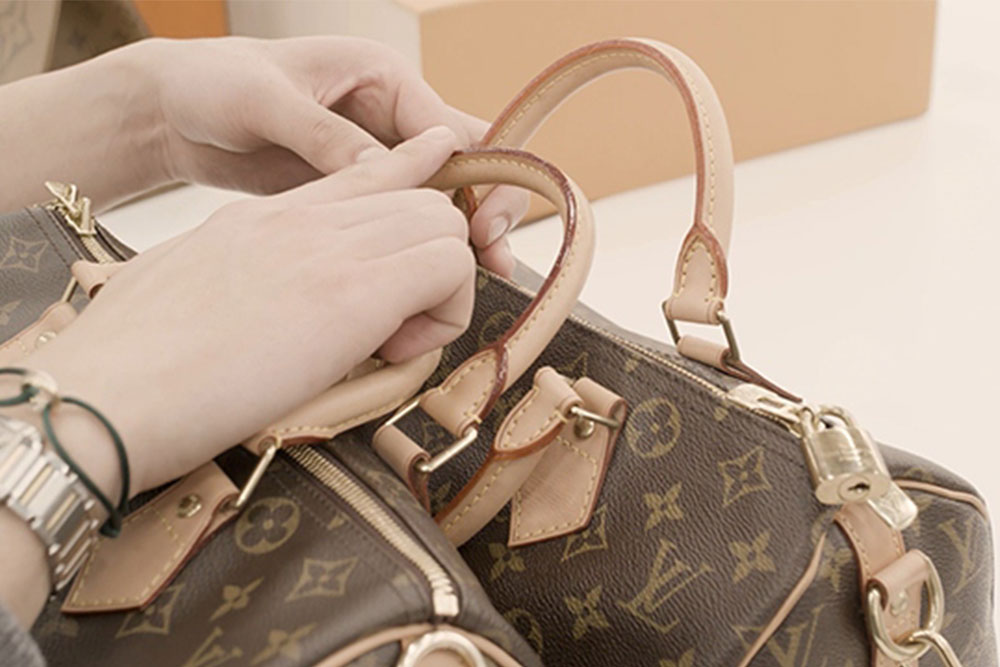
- Hardware: Close-ups of zippers (front and back of the pull), clasps, rivets, D-rings, and any other metal parts. Focus on the engraving quality.
- Stitching: Detailed shots of the stitching on the handles, corners, and seams.
- Materials: Close-ups of the canvas pattern, leather grain, or other exterior material.
- Interior: Shots of the lining, interior pockets, and any tags inside.
- Packaging: Photos of the box, dust bag, and any included receipts or authenticity cards (which are often fake themselves).
These photos will be used for two purposes: first, to submit to a professional authenticator, and second, to include in your claim to the platform.
3. Write Down Your Concerns
While photos show the evidence, you need to explain what that evidence means. Make a list of everything that seems wrong with the item. Be specific.
- Instead of “The logo is off,” write “The font on the heat stamp is too thick, and the ‘O’ is round instead of oval-shaped.”
- Instead of “It feels cheap,” write “The canvas is stiff and has a chemical smell, unlike the pliable feel of authentic canvas.”
- Instead of “The date code is wrong,” write “The date code indicates the bag was made in 2020, but this model was discontinued in 2018.”
This list will help you organize your thoughts and will be invaluable when you write your statement for the claim.
The Most Critical Step: Obtaining Third-Party Authentication
Here is the hard truth: without a professional, third-party opinion, your claim is likely to fail. Your opinion that the bag is fake, no matter how correct, is just an opinion. Platforms need an expert verdict.
Why You Can’t Skip This Step
When you submit a claim to PayPal, they will almost inevitably ask for proof of inauthenticity from a qualified source. If you file a chargeback with your bank, they will require it. Poshmark gives significant weight to it. Trying to win a claim without it is like going to court without a lawyer.
This is where a service like ProAuthenticators becomes your greatest asset. We provide detailed, written certificates that are specifically designed to meet the evidentiary standards of these platforms. Our expert reports explain why an item is counterfeit, pointing to the specific flaws you’ve photographed. Our long history and outstanding reviews lend our documents a level of credibility that platforms recognize and trust.
Choosing the Right Service
When preparing for a claim, do not opt for a basic “pass/fail” authentication. You need a formal, detailed report. Visit our services and pricing page and select a service tier that explicitly mentions a “Certificate for Claims” or “Detailed Written Report.” This document will become the cornerstone of your dispute.
How to Submit Your Claim: A Step-by-Step Guide
Once you have your evidence binder (the listing, your photos, and your authentication certificate) ready, it is time to formally open the case.
Step 1: Navigate to the Resolution Center
Log in to your PayPal, Poshmark, or online banking portal and find the option to open a dispute for the transaction. The language will vary (“Open a Case,” “Report a Problem,” “Dispute a Charge”), but the function is the same.
Step 2: Select the Correct Reason for the Claim
This is critical. You must choose the option for “Item is not as described,” “Item is counterfeit,” or a similar category. Do not select “Item not received.” Choosing the wrong category can get your claim closed immediately.
Step 3: Write Your Initial Statement
You will be given a text box to explain the problem. This is where your preparation pays off. Write a clear, concise, and professional statement. Avoid emotional language, ALL CAPS, and personal attacks on the seller. Stick to the facts.
Sample Statement Structure:
- Opening: “I am filing this claim because the Louis Vuitton Neverfull bag I received is counterfeit, and therefore ‘Significantly Not as Described’.”
- Reference the Listing: “The seller’s listing (Listing ID #12345) described the item as ‘100% authentic.’ This representation was false.”
- Summarize the Flaws: “Upon receiving the item, I identified several inconsistencies with authentic Louis Vuitton products. These include incorrect font on the heat stamp, a contradictory date code, and poor-quality hardware.”
- Introduce Expert Proof: “To confirm my suspicions, I obtained a professional third-party authentication from ProAuthenticators, a recognized expert in Louis Vuitton. Their detailed report, which I have attached, concludes the item is not authentic and outlines the specific reasons for this verdict.”
- Closing: “Based on this definitive evidence, I am requesting a full refund of my payment.”
This structure is factual, authoritative, and immediately signals to the claims adjuster that you have done your homework.
Step 4: Upload Your Evidence
Now, upload all the documents you’ve gathered:
- The Detailed Authentication Certificate: This is your primary piece of evidence.
- Screenshots of the Original Listing: This proves what the seller promised.
- Your Photos of the Item: Upload a selection of your best photos that clearly show the flaws mentioned in the authentication report. If you can, circle or point to the flaws in the images using a simple photo editor.
Organize your uploads clearly. If the platform allows you to label the files, name them descriptively (e.g., “Authentication_Certificate.pdf,” “Sellers_Listing.jpg,” “Date_Code_Flaw.jpg”).
Step 5: Await and Respond Professionally
After you submit, the seller will be notified and given a chance to respond. In many cases, sellers of counterfeit goods will become defensive. They may attack your character or the credibility of your authenticator.
Do not engage in a back-and-forth argument. Let your evidence do the talking. If you need to respond, keep it brief and professional. Simply state: “My position is supported by the detailed expert report I have already provided. I stand by the evidence submitted.”
Special Considerations for Each Platform
Poshmark Claim Preparation
- The 3-Day Rule: You must open a case within 3 days of delivery. Once you accept the item or the 3-day window closes, your funds are released to the seller and you can no longer file a claim. Be vigilant.
- Communicate with Poshmark Only: Do not get into a debate with the seller in the comments section. All communication should be within the formal case you open with Poshmark support.
Submitting a Claim to PayPal
- Deadlines are Firm: PayPal will give you and the seller strict deadlines to respond or provide information. Do not miss them. If they ask for more information, provide it promptly.
- Escalate the Claim: An initial dispute is a period for you and the seller to resolve the issue yourselves. If it’s clear the seller will not agree to a refund, escalate the dispute to a PayPal claim as soon as possible so that PayPal’s team can step in and review the evidence.
The Bank Refund Process (Chargebacks)
- Last Resort: A chargeback is a powerful tool, but it’s often best used after you have tried to resolve the issue through the platform’s own process (if applicable).
- Paper Trail is King: Banks are even more formal than PayPal. They may require you to mail or fax physical copies of your evidence. Be prepared to provide the authentication certificate and all supporting documents in the format they require.
- Be Prepared for a Provisional Credit: Many banks will issue a “provisional credit” to your account while they investigate. This is not a final win. The merchant (seller) has the right to fight the chargeback, which is why your initial evidence needs to be ironclad.
Conclusion: Preparation is the Key to Victory
Being sold a counterfeit luxury item is a deeply frustrating experience. However, you are not powerless. By taking a methodical and professional approach to the claims process, you can significantly increase your chances of getting a full refund.
The formula for success is simple: document everything, photograph meticulously, and—most importantly—invest in a detailed, professional authentication certificate. This expert report is the single most powerful tool in your arsenal. It elevates your claim from a subjective opinion to a fact-based case that is difficult for any platform or bank to deny.
Do not let frustration lead you to file a hasty, unprepared claim. Take a deep breath, follow the steps outlined in this guide, and build a case that is too strong to lose.
If you are ready to get the expert proof you need to win your dispute, review our services and pricing today. Choose the right service for your claim and take the first step toward getting your money back.
Frequently Asked Questions (FAQ)
What if the seller offers me a partial refund?
Be very wary of partial refund offers. Accepting one usually requires you to close the claim, and you will be left with a worthless counterfeit bag. In almost all cases, you should decline the partial refund and continue to pursue a full refund.
The platform is asking me to return the counterfeit item. Should I?
Follow the platform’s instructions precisely. If they rule in your favor and require you to return the item to the seller for a refund, you must do so. Always use a shipping method with tracking and insurance, and upload the tracking number to the claim as proof of shipment. Failure to return the item can void your refund.
What if the seller has a receipt for the item?
Receipts can be easily faked, doctored, or from a different, authentic item. A detailed authentication report that proves the physical item in your possession is fake will almost always outweigh a seller’s receipt.
How long does the claims process take?
This varies widely. A straightforward Poshmark claim might be resolved in a few days. A complex PayPal claim or bank chargeback could take several weeks or even a couple of months. Patience and professional persistence are key.
I lost my claim. What can I do?
Some platforms offer an appeals process. If your initial claim was denied because of insufficient evidence, you can appeal by providing new and more compelling proof, such as a detailed authentication certificate you didn’t have before. Contact the platform’s customer service to inquire about your options for appeal.
Louis Vuitton Authentication made easy!
You are unsure if you are looking at an authentic or fake LV? We offer the quickest and the most accurate way to get it authenticated for your peace of mind.
Authenticate Now