You’ve invested in a luxury handbag, a piece you’ve cherished or perhaps just acquired. You’ve taken the crucial first step of getting it authenticated, confirming it’s a genuine piece from your favorite designer. But beyond knowing it’s real, another question often surfaces: “What is it actually worth?” This is where price estimation becomes an invaluable addition to your authentication certificate.
A price estimation, often called a valuation or appraisal, transforms your certificate from a simple document of legitimacy into a powerful financial tool. It provides a data-driven snapshot of your item’s current market value, giving you the clarity needed to make informed decisions about selling, insuring, or managing your luxury assets. But how is this number determined? It’s not just a guess—it’s a science rooted in deep market analysis and specialized expertise.
In this detailed guide, we will pull back the curtain on how luxury item price estimation works. We will explore the critical factors that influence an item’s value, from its physical condition to fluctuating market trends. You’ll learn why this service is essential for sellers looking to maximize profit, for buyers wanting to confirm a good deal, and for owners needing to protect their investments.
Price Estimation vs. Authentication: What’s the Difference?
Before diving into the process, it’s important to distinguish between authentication and price estimation. While often offered together, they are two distinct services that answer different questions.
- Authentication answers: “Is it real?” An expert examines an item’s hardware, stitching, materials, and serial codes to verify its legitimacy against brand standards. The result is a simple verdict: authentic or inauthentic.
- Price Estimation answers: “What is it worth?” This process assigns a monetary value to an item based on its current standing in the secondary market. It can only be performed after an item has been deemed authentic, as counterfeit goods have no legitimate market value.
Think of it this way: authentication is like verifying the title of a car, while price estimation is like looking up its Kelley Blue Book value. You need both to fully understand the asset you own. A certificate with price estimation combines these two essential pieces of information into a single, comprehensive document.
The Core Factors That Determine a Luxury Item’s Value
A price estimation is not a single, static number but a reflection of multiple dynamic factors. At Pro Authenticators, our experts analyze a combination of elements to arrive at an accurate valuation. Here’s a breakdown of what we look at.
1. The Item’s Condition: The Foundation of Value
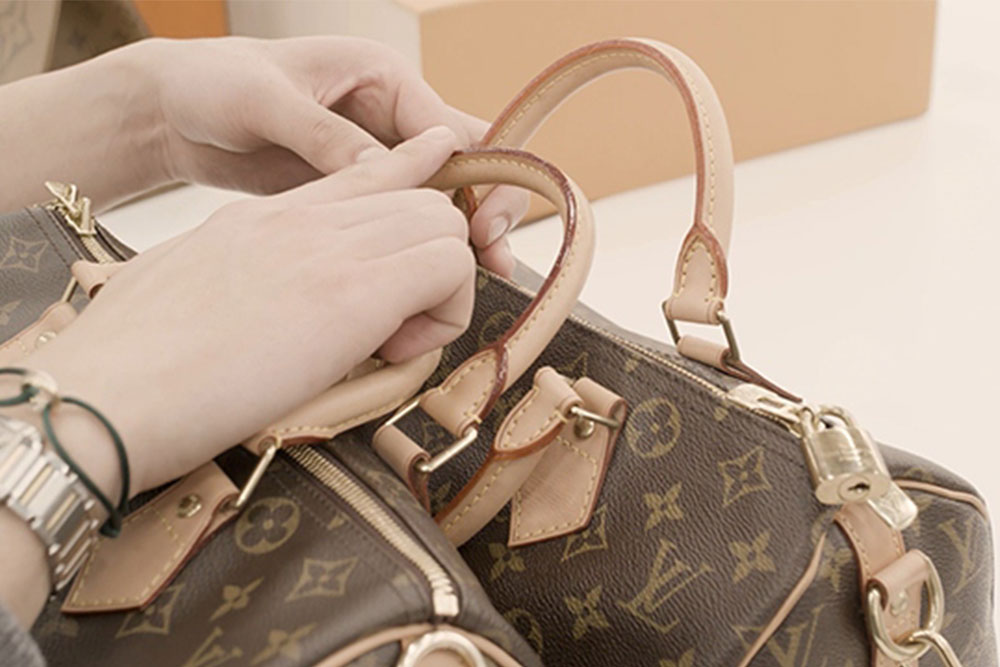
Condition is, without a doubt, the most significant factor influencing an item’s price. A bag that looks like it just left the store will always command a higher price than one that has been well-loved. We use a standardized grading system to evaluate condition, looking at specific details:
- Exterior: Are there scratches, scuffs, or stains on the leather or canvas? Are the corners worn down?
- Interior: Is the lining clean? Are there pen marks, makeup stains, or odors (like smoke or perfume)?
- Hardware: Is the hardware bright and shiny, or is it tarnished, scratched, or chipped?
- Structure: Does the bag hold its original shape, or has it softened or slouched over time?
An item described as “Pristine” or “Like New” might retain 80-95% of its retail price, while one graded as “Fair” or “Well-Used” with visible flaws might only fetch 30-50%. Honesty about an item’s condition is crucial for an accurate estimation.
2. Brand and Model: The Hierarchy of Desirability
Not all luxury brands or models are created equal in the secondary market. A handbag from Hermès, Chanel, or Louis Vuitton typically has stronger resale value than one from a contemporary designer brand.
Within a brand, certain models are considered “holy grails.” For example:
- A Chanel Classic Flap or a Hermès Birkin are investment pieces that often appreciate in value.
- A Louis Vuitton Speedy or Neverfull are iconic staples with consistently high demand.
- A limited-edition collaboration piece may skyrocket in value shortly after its release due to scarcity.
Our team has deep knowledge of these brand hierarchies and monitors the performance of specific models to provide a precise valuation.
3. Rarity and Scarcity
The basic economic principle of supply and demand is a powerful force in the luxury market. Items that are hard to find are naturally more valuable. Rarity can be influenced by several factors:
- Discontinued Models: When a brand stops producing a certain style (like the Louis Vuitton Multicolore collection), nostalgia and scarcity can drive up prices among collectors.
- Limited Editions: Special runway collections or artist collaborations are produced in finite numbers, making them instant collectibles.
- Vintage Pieces: A well-preserved item from a specific, desirable era can be more valuable than its modern counterpart.
An expert appraiser knows which pieces are genuinely rare versus those that are just old. This expertise is critical for identifying items with hidden value.
4. Current Market Trends and “It” Factor
The fashion world is fickle. An item that was everywhere five years ago might feel dated today, while a vintage style could suddenly be trending thanks to a celebrity or a popular TV show. Our price estimation process involves active, real-time market analysis. We look at:
- Sold Data: We don’t just look at what sellers are asking for an item; we analyze what items are actually selling for across major resale platforms. This is the most reliable indicator of true market value.
- Social Media and Pop Culture: Is a certain bag being carried by influencers and celebrities? A surge in public visibility can create a spike in demand and price.
- Brand Price Increases: When brands like Chanel and Louis Vuitton increase their retail prices, it has a ripple effect on the pre-owned market, often pulling vintage prices up with it.
Staying on top of these trends is a full-time job, and it’s a core part of the expertise we provide through our Pro Authenticators services.
5. Inclusions: The Little Things That Add Up
What comes with the bag can also impact its value. Having the original “full set” can add a premium to your asking price, as it helps prove provenance and gives the buyer a better experience. These items include:
- Original dust bag
- Branded box
- Authenticity card (for brands like Chanel)
- Original receipt
While not essential, having these inclusions can boost an item’s value by 5-10% in some cases, as it signals that the item was well-maintained.
How We Put It All Together: The Estimation Process
When you request a price estimation from Pro Authenticators, our team undertakes a systematic evaluation.
- Authentication First: We never appraise an item without first confirming its authenticity. This is a non-negotiable first step to ensure we are only valuing genuine goods.
- Photo Analysis: You provide a series of high-quality photos covering all angles of the item, including any flaws. Our experts meticulously review these images to grade the item’s condition.
- Data Comparison: We then take our analysis of the specific model and its condition and compare it against our extensive database of real-time sales data. We look at what identical or similar items have sold for in the last 30-90 days.
- Value Assignment: Based on this data, we assign an estimated market value. This is often presented as a range (e.g., “$2,200 – $2,500”). This range reflects the potential fluctuations in the market and differences between selling platforms (e.g., selling privately vs. on consignment).
- Certificate Issuance: The final valuation is added to your certificate, providing you with a formal document that states the item’s authenticity and its estimated worth.
When Is a Price Estimation Essential?
Adding a price estimation to your certificate is more than just satisfying curiosity. It’s a strategic move that provides tangible benefits in several key scenarios.
For Sellers: Maximize Your Profit and Sell Faster
If you’re selling a luxury item, pricing it correctly is the most important step. A certificate with price estimation is your best friend.
- Avoid Underselling: Without a professional valuation, it’s easy to leave money on the table. You might price your bag based on what you see on public listings, not realizing those are for items in poorer condition. A price estimation ensures you ask for what your item is truly worth.
- Justify Your Asking Price: A certificate from a trusted third party like Pro Authenticators acts as proof. It tells potential buyers that your price is not arbitrary but is based on an expert evaluation. This builds trust and can lead to a quicker sale.
- Negotiate with Confidence: When a buyer tries to lowball you, you can stand firm, backed by your professional valuation report.
For Owners: Insure Your Assets Properly
This is one of the most critical and overlooked reasons for getting a price estimation. Standard homeowner’s or renter’s insurance policies have very low coverage limits for valuables like luxury handbags (often as low as $1,500). If your collection is worth more, you are underinsured.
To get proper coverage, you need a “rider” or a separate policy. Insurance companies require a professional appraisal to issue these policies because they need to know the exact value of the items they are insuring. Our certificate with price estimation serves as the official documentation your insurance agent needs to ensure your collection is protected against theft, fire, or damage.
For Estate Planning and Legal Matters
Luxury items are assets that must be accounted for in legal situations.
- Estate Settlement: When dividing assets among heirs, a professional valuation ensures fairness and prevents disputes.
- Divorce Proceedings: In a divorce, marital assets must be valued for equitable distribution. A formal certificate provides the documentation needed for legal proceedings.
- Charitable Donations: If you donate a high-value item to charity, the IRS requires a qualified appraisal to substantiate your tax deduction.
For Buyers: Confirm You Got a Good Deal
As a buyer, you can use our service after a purchase to confirm you paid a fair price. If the seller claimed the bag was in “excellent” condition and you paid top dollar, our evaluation can confirm if the price was justified. If we determine the value is significantly lower due to undisclosed flaws, our report can support you in a dispute with the seller.
Why Trust Pro Authenticators for Your Price Estimation?
The accuracy of a price estimation is only as good as the expert providing it. At Pro Authenticators, our team is composed of seasoned professionals who live and breathe the luxury market.
- Specialized Expertise: We don’t just appraise general antiques; we specialize in luxury brands. We know the nuances that determine value, from the desirability of a specific leather to the market impact of a recent runway show.
- Data-Driven Approach: Our valuations are not based on opinion alone. They are rooted in constant analysis of real-world sales data, ensuring our estimates reflect the current market, not an outdated price guide.
- Transparent and Convenient Process: Our entire process is done online through photos, saving you the time and risk of shipping your valuable items. As you can see on our Services & Pricing page, we offer clear, upfront pricing for our services, including the option to add a price estimation to your certificate.
- Trusted by Thousands: We have built a reputation for accuracy and integrity. Our clients rely on our expertise for some of their most important financial decisions. We are proud of the feedback we receive, which you can read on our customer reviews page.
Conclusion: Knowledge Is Power in the Luxury Market
Your luxury items are more than just beautiful accessories; they are investments. Understanding their true market value is essential for protecting and managing those investments effectively. Adding a price estimation to your authentication certificate provides the knowledge you need to operate with confidence in the secondary market.
It empowers you to sell for the right price, secure the right insurance, and handle legal matters with clarity. It replaces guesswork with data and uncertainty with confidence. A small investment in a professional valuation can save or earn you thousands of dollars in the long run.
Don’t leave the value of your assets to chance. Whether you’re a seasoned collector or a first-time seller, take the next step in smart ownership.
Louis Vuitton Authentication made easy!
You are unsure if you are looking at an authentic or fake LV? We offer the quickest and the most accurate way to get it authenticated for your peace of mind.
Authenticate Now