The world of pre-loved luxury is built on a foundation of trust. Buyers invest significant sums of money with the expectation that the Hermès Birkin, Chanel Flap Bag, or Rolex watch they purchase is genuine. But what happens when an item has lived a long life, undergoing repairs and part replacements along the way? A handbag might have a new strap, a watch a new bezel, or a piece of luggage new wheels. While repairs can extend the life of a cherished item, they introduce a significant challenge for professional authentication.
There comes a point where an item has so many replaced, non-original components that its core identity becomes diluted. At this threshold, an authenticator may have to make a difficult call: the item can no longer be definitively authenticated. This isn’t a declaration that the item is a counterfeit, but rather an acknowledgment that the key markers required for verification have been lost or altered.
This guide will explore the complex world of authenticating items with replaced parts. We will cover why certain replacements are more problematic than others, how professional authenticators identify these modifications, and what an “inconclusive” or “unable to authenticate” result means for you as a buyer or seller.
Understanding the Authenticator’s Perspective: A Puzzle with Missing Pieces
Think of a luxury item as a complex puzzle. Each component—the leather, hardware, stitching, lining, and date code—is a piece that must fit perfectly with the others to form a complete, authentic picture. When you replace a piece of hardware with a non-branded alternative or reline a bag with different material, you are essentially swapping an original puzzle piece for one from a different box.
A professional authenticator’s job is to examine every single one of these pieces. We are trained to recognize the specific characteristics of components used by a brand during a specific manufacturing period. A zipper from a 2010 Louis Vuitton Speedy does not look the same as one from a 2020 model. The engravings on a clasp, the weight of a chain, and the font of a stamp are all critical data points.
When too many of these data points are missing or have been replaced with aftermarket parts, the puzzle becomes unsolvable. We are left with a collection of disparate components that no longer tell a coherent story about the item’s origin.
The Slippery Slope of Modifications
A single, well-documented repair by the original brand is usually not a problem. For instance, if you send your Chanel bag to Chanel for a strap repair, the work will be done with brand-approved parts and craftsmanship. This maintains the item’s integrity.
The issues arise from third-party or aftermarket modifications. These can range from minor fixes to major overhauls:
- Minor: Replacing a lost zipper pull with a generic one.
- Moderate: Replacing an entire broken strap with a non-branded leather strap.
- Major: Replacing all the hardware (zippers, clasps, feet) on a handbag.
- Extreme: Relining the entire interior, dyeing the exterior a new color, and replacing handles.
At some point, the item ceases to be a “repaired Chanel bag” and becomes a “hybrid” or “frankenbag”—an amalgamation of authentic and inauthentic parts.
Common Scenarios: When Replaced Parts Complicate Authentication
The challenges of aftermarket modifications are not theoretical. We encounter them every day. Certain items and specific types of replacements are more common and more problematic than others.
Scenario 1: The Handbag with Aftermarket Hardware
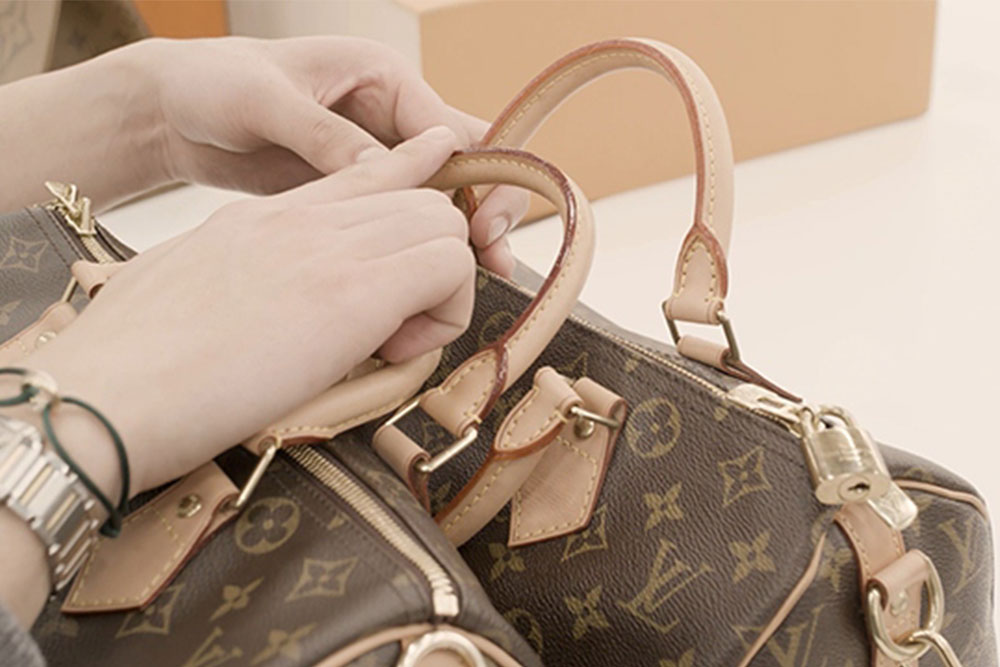
A customer submits a vintage Louis Vuitton bag for authentication. The canvas monogram looks correct, and the construction seems right for its age. However, upon closer inspection, our authenticators notice that the rivets, D-rings, and zipper pull are all unbranded. They lack the precise “LV” engravings and the specific brass alloy the brand used during that era.
The Problem: The hardware on a luxury bag is a primary point of authentication. Counterfeiters often struggle to replicate it perfectly. When the original hardware is gone, a huge piece of evidence is missing. While the body of the bag might be authentic, we can no longer be 100% certain. If the date code tab has also been removed or has faded, we are left with very little to go on.
The Result: Depending on how many other authentic markers remain, this item could be deemed “inconclusive” or “unable to authenticate due to excessive replaced parts.”
Scenario 2: The Watch with a Non-Branded Movement
A seller wants to list a pre-owned Rolex Submariner. The case, bracelet, and dial appear correct. However, upon opening the case back, a watch specialist discovers that the original Rolex movement has been replaced with a generic Swiss or Japanese movement.
The Problem: The movement is the heart of a luxury watch. It is the most complex and valuable component. An authentic Rolex case containing an aftermarket movement is, for all intents and purposes, no longer a Rolex watch in the eyes of the brand and the serious collector community. It is a shell of its former self.
The Result: This item would not be authenticated as a genuine Rolex. It would be identified as a watch with an authentic case but an aftermarket movement, drastically reducing its value and marketability.
Scenario 3: The “Restored” Bag with a New Interior and Color
We often see vintage bags, particularly from brands like Chanel, that have been “professionally restored.” This can involve re-dyeing faded leather and replacing a worn-out interior. A seller might present this as a positive, highlighting that the bag looks “like new.”
The Problem: This is one of the most difficult authentication challenges.
- Re-dyeing: When a bag is re-dyed, it covers the original leather. This prevents an authenticator from assessing the leather’s natural aging, texture, and smell—all key indicators. It can also obscure heat stamps and other markings.
- Relining: Replacing the interior removes the original lining material, interior stamps, date codes, or serial sticker holograms. The new lining, no matter how high-quality, erases a massive part of the bag’s identity.
The Result: An item with a new color and a new interior has lost almost all its primary authentication points. It is nearly impossible to authenticate such a piece with certainty. The original “soul” of the item has been stripped away, leaving only the exterior shape. It becomes a ghost of the original product.
When dealing with items that have undergone extensive work, it’s critical to have an expert opinion. Our team has seen thousands of modifications and can help you understand what you’re buying or selling. Explore our Services & Pricing to find the right authentication level for your item.
How Do Professional Authenticators Identify Replaced Parts?
Identifying aftermarket parts requires a deep, encyclopedic knowledge of a brand’s manufacturing history. It’s not just about looking for a logo; it’s about knowing the subtle details that change from year to year.
The Multi-Point Inspection Process
Our process is forensic in its detail. We look at:
- Hardware Specifics: We know the exact shape of a zipper pull from a specific collection, the font used on an engraving in a given year, and the weight and finish of a metal clasp. A generic replacement part will not match these precise specifications.
- Stitching and Thread: If a strap has been replaced, the stitching pattern or thread color may not match the rest of the bag. Brands use specific thread types and stitches-per-inch counts that third-party repair shops rarely replicate perfectly.
- Material Consistency: Does the leather on a replacement handle match the grain and wear of the bag’s body? Does the lining material feel correct for the era? We can often spot a replacement by feel and sight alone.
- Tool Marks and Construction: When a part is replaced, it often leaves microscopic tool marks around the area. An amateur repair on a watch case or a handbag stud can be a dead giveaway.
- Brand Knowledge: The most important tool is our database of knowledge. We know that a certain Louis Vuitton model was never released with feet, so if we see one with added feet, it’s an immediate red flag. We know Chanel stopped using hologram stickers at a certain point, so a newer bag with one is suspect.
This rigorous process is why so many clients trust us to protect their investments. They know we leave no stone unturned. Our reputation is built on this meticulous attention to detail, as our customer Reviews demonstrate.
The Impact on Value and Resale
An “unable to authenticate” verdict significantly impacts an item’s value. Even if parts of the item are genuine, the modifications create doubt and risk for a potential buyer.
Devaluation Factors
- Loss of Originality: Collectors and informed buyers prize items that are as close to their original state as possible. Every aftermarket part diminishes this originality.
- Question of Authenticity: If an authenticator cannot be 100% sure, a buyer certainly can’t be. The item enters a gray market where it is sold “as is,” often for a fraction of what a fully authenticatable counterpart would command.
- Brand Service Refusal: If you take an item with significant aftermarket parts to the original brand for repair (e.g., a Rolex with a generic movement), they will likely refuse to service it. This is a major blow to the item’s long-term value and usability.
A Seller’s Responsibility
As a seller, it is your responsibility to be transparent about any and all repairs and modifications. Attempting to pass off a heavily modified item as “all original” is unethical and can lead to costly disputes and damage to your reputation.
A professional authentication report can provide this transparency. Even if the result is “inconclusive due to replaced parts,” it gives the buyer a clear, expert assessment of the item’s condition. It manages expectations and builds trust, even when the news isn’t what the seller hoped for.
“Inconclusive” Does Not Always Mean “Fake”
It’s crucial to understand the nuance of an authenticator’s report. When an item is determined to have too many replaced parts, the verdict is often “inconclusive” or “unable to authenticate,” not “counterfeit.”
- Counterfeit: This means the item was produced by an unauthorized manufacturer to deceive buyers. It was never genuine.
- Inconclusive: This means that due to alterations, missing information, or the high quality of a potential fake, a definitive “authentic” or “counterfeit” determination cannot be made with 100% certainty. The presence of excessive replaced parts is a common reason for this result.
This distinction is important. The seller of an inconclusive item may genuinely believe it to be authentic, and they may be partially right. The body of the bag could very well have come from a Chanel factory. However, because its key identifying features have been stripped away, its provenance can no longer be verified to our professional standards. We will not risk our reputation—or your money—on a guess.
Conclusion: Preserve Originality to Protect Value
The allure of a vintage luxury piece often lies in its history. But that history can include a few battle scars and repairs. While maintaining an item is essential, the way it is maintained makes all the difference. Whenever possible, seek repairs from the original manufacturer to ensure that brand-standard parts and techniques are used.
If you are considering buying a pre-owned item, especially one described as “restored” or “refurbished,” proceed with caution. Ask the seller for a detailed history of all work done on the item. Better yet, insist on a current certificate from a reputable, independent professional authenticator.
An item with too many replaced parts exists in a state of limbo. It is no longer what it once was, and its authenticity can no longer be guaranteed. The key markers that we rely on to protect you from counterfeits have been erased. As professional authenticators, our primary duty is to provide certainty. When modifications make certainty impossible, the only responsible course of action is to state that the item cannot be authenticated.
Protect your investments by prioritizing originality. And when in doubt, let the experts examine the pieces of the puzzle. Visit our Services & Pricing page to get a professional opinion on your item, and see why thousands of customers trust our judgment by reading our Reviews. In the world of luxury, what’s been replaced matters just as much as what remains.
Louis Vuitton Authentication made easy!
You are unsure if you are looking at an authentic or fake LV? We offer the quickest and the most accurate way to get it authenticated for your peace of mind.
Authenticate Now