In the world of luxury goods, a verbal confirmation of authenticity is a powerful tool. It’s the quick, cost-effective nod of approval that allows resellers to confidently source inventory and buyers to make informed purchasing decisions. For many day-to-day transactions, this verbal “yes” or “no” is all that’s needed. But what happens when the stakes get higher? What happens when you need more than just an opinion—when you need indisputable, documented proof?
This is where upgrading your authentication to a formal, detailed certificate becomes not just a smart option, but a critical business necessity. While a verbal authentication serves your internal needs, a certificate is an external-facing tool designed to protect your assets, build trust, and maximize value. Many sellers operate under the assumption that a certificate is an unnecessary expense, only to learn its true value when facing a costly dispute or a skeptical high-value buyer.
Understanding when to make this strategic upgrade is key to navigating the luxury market with confidence and professionalism. This comprehensive guide will walk you through the specific scenarios that call for a detailed certificate, explain the tangible benefits of doing so, and illustrate why this single document can be one of the most important investments you make in your business.
The Two Tiers of Authentication: A Quick Recap
Before we explore the “when,” let’s clarify the “what.” Our authentication services are generally offered in two tiers, each designed for a different purpose.
Tier 1: The Verbal Authentication
This is your foundational service. You submit photos, and our experts conduct a thorough review, providing you with a simple email verdict: “Authentic” or “Not Authentic.”
- Purpose: Fast, internal decision-making.
- Best For: Pre-screening potential purchases, quick inventory checks, and personal peace of mind.
- Limitation: It is an expert opinion for your use only. It is not official documentation and cannot be used to fight claims or formally prove authenticity to a third party.
Tier 2: The Detailed Certificate of Authenticity (COA)
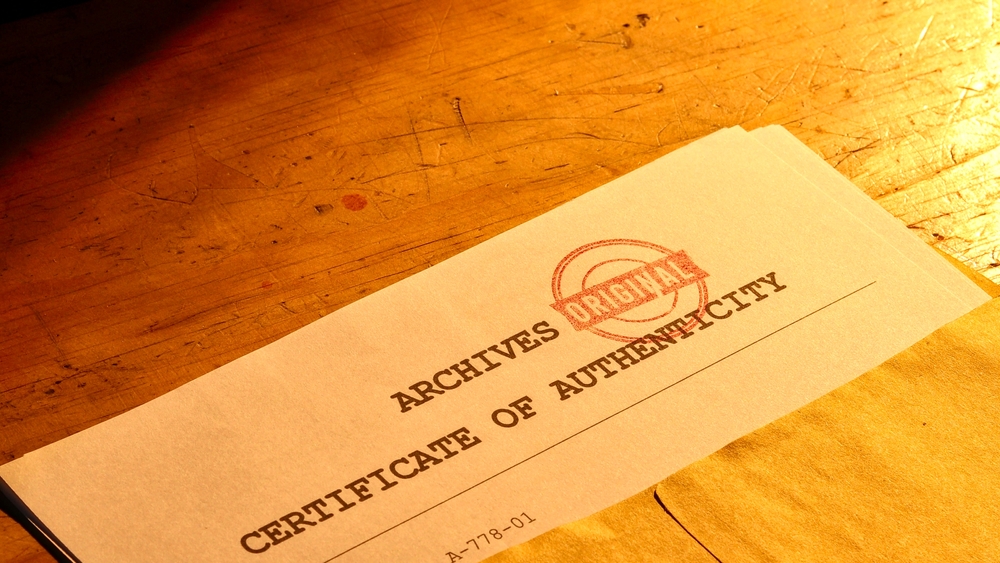
This is the upgrade. It includes the same meticulous authentication process but results in a formal, shareable document. This PDF certificate includes a photo of your item, a detailed description, and a verifiable statement of authenticity from our company.
- Purpose: Providing external, undeniable proof.
- Best For: Resolving disputes, securing high-value sales, and building buyer trust.
- Power: It is a formal document designed to be presented to marketplaces, payment processors, and discerning buyers.
The decision to upgrade is the decision to move from an internal opinion to external proof. Our services and pricing page details the specifics of each offering, but the strategic value is what we will explore here.
The Non-Negotiable Scenario: Protecting Yourself from Payment Disputes
If there is one reason that single-handedly justifies the cost of a certificate upgrade, it is for financial protection. The world of online sales has a dark side: fraudulent buyer claims. A dishonest buyer can purchase a perfectly authentic item, then file a “counterfeit” claim with their payment provider (like PayPal or a credit card company) to force a refund, a practice often called “friendly fraud.”
In this situation, the burden of proof is on you, the seller.
Why a Verbal Authentication Isn’t Enough
When you face a payment dispute, the company adjudicating the claim acts as a judge. They need hard evidence, not hearsay. An email from an authenticator stating an item is “Authentic” is, in their view, not sufficient. It lacks the formal elements and verifiability they require. Submitting a simple email verdict is likely to result in you losing the dispute.
- Scenario: You sell a beautiful, authentic Prada handbag for $1,800. The buyer receives it and initiates a chargeback, claiming the bag is a fake. Your $1,800 is immediately frozen. You frantically search your emails and submit the “Authentic” verdict you received from your verbal authentication. A week later, you receive a notification that the dispute was decided in the buyer’s favor. You are out the $1,800, and often, the buyer is not even required to return the handbag. You’ve lost both your money and your product.
How a Detailed Certificate Changes the Game
Now, let’s replay that scenario with an upgraded certificate.
- Scenario 2.0: You sold the same $1,800 Prada bag, but because it was a high-value item, you invested in a Detailed Certificate after your initial verbal confirmation. When the buyer files the fraudulent claim, you are prepared. You submit the formal, multi-page PDF certificate as your primary piece of evidence. This document includes:
- Clear, high-resolution photos of the exact bag in question.
- Our company’s name and contact information, establishing us as a credible expert source.
- A definitive statement of authenticity.
The payment processor now has what it needs: professional, third-party documentation. The certificate refutes the buyer’s claim with authority. The dispute is closed in your favor, your $1,800 is released, and your seller metrics are protected. The cost of the certificate becomes a small insurance premium that just saved you nearly two thousand dollars. As our reviews show, providing clients with this level of protection is a cornerstone of our service.
Rule of Thumb: If you cannot afford to lose both the item and the full sale amount, you should upgrade to a Detailed Certificate.
The Value-Add Scenario: Maximizing Price and Trust on High-Value Items
Beyond protection, a certificate is a powerful tool for offense—it helps you build value and command a better price. For certain items, buyer skepticism is the default position. Your job as a seller is to overcome that skepticism, and a certificate is your most effective tool for doing so.
You should always consider upgrading to a certificate when dealing with:
1. High-Ticket Items
There is a psychological threshold for every buyer. While someone might take a chance on a $300 wallet, they will be far more cautious when considering a $3,000 handbag. The higher the price, the greater the need for assurance.
- Scenario: You are listing a Chanel Classic Flap bag for $6,500. A potential buyer is very interested but hesitant, asking repeated questions about its history and authenticity. You can answer their questions and send them photos, but doubt lingers.
- The Upgrade Solution: Imagine instead that your listing includes the phrase: “This bag has been professionally authenticated and will come with a formal Certificate of Authenticity.” This single sentence preemptively answers the buyer’s biggest question. It signals professionalism and transparency. The certificate transforms a high-risk purchase into a secure investment, making the buyer far more likely to click “buy now.” The cost of the certificate is a tiny fraction of the sale price but can be the deciding factor that closes the deal.
2. Brands Prone to “Super Fakes”
The counterfeit market is constantly evolving. For certain highly desirable brands, “super fakes” exist that are alarmingly convincing to the untrained eye. Buyers are aware of this, and their guard is up.
- Brands of Concern:
- Hermès (Birkin, Kelly, Constance)
- Chanel (Classic Flaps, Boy Bags)
- Dior (Book Totes, Saddle Bags)
- Goyard
- Certain Louis Vuitton limited editions
- Scenario: You are selling a Dior Book Tote, a model notorious for high-quality replicas. A knowledgeable buyer will be scrutinizing every photo, and even then, they may not be confident enough to purchase from a reseller without additional proof. Simply stating “it’s authentic” is not enough. Providing a Detailed Certificate from a reputable third party is the only way to bridge that trust gap.
3. Items with Ambiguous History
Sometimes you acquire an item with little to no backstory. It might be from an estate sale, a thrift store, or a liquidation pallet. It may lack a date code (as some authentic items do) or have undergone repairs that could raise questions.
- Scenario: You find a beautiful vintage Fendi Baguette that has had its lining professionally replaced. The bag is authentic, but the repair has altered it from its original state. A buyer might see this as a red flag. A Detailed Certificate serves as an expert declaration that, despite the alterations, the item’s core construction, materials, and hardware are authentic. It neutralizes potential objections before they even arise.
The Strategic Scenario: Elevating Your Brand and Market Position
A certificate isn’t just about a single transaction; it’s about building your long-term reputation as a seller. Consistently providing certificates with your sales positions you as a premium, trustworthy source in a crowded market.
Stand Out from the Competition
Browse any major resale platform for a popular luxury item. You will see dozens of listings that look nearly identical. How do you make yours the one that gets the click and the sale? A certificate is a key differentiator.
- Scenario: A customer is searching for a Gucci Marmont bag. They see ten listings at similar price points. Nine of them are just the bag. Your listing includes a photo of the COA and clearly states that the bag comes with professional authentication documentation. Your listing immediately appears more legitimate and valuable. Many buyers are willing to pay a slight premium for this peace of mind, meaning you might sell your item faster and for a better price than your competitors.
Build a Loyal Customer Base
First-time buyers are cautious. Repeat buyers are confident. A certificate helps turn the former into the latter. When a customer has an exceptional first-time experience—receiving a beautiful item complete with formal proof of its authenticity—they remember it.
- The After-Sale Experience: The certificate extends the positive experience beyond the moment of unboxing. The customer has a document they can keep for their records or use if they ever decide to re-sell the item themselves. This added value makes them more likely to return to your shop for future purchases and to recommend you to others. You are no longer just a random seller; you are their trusted source for luxury goods.
When You Might Not Need to Upgrade
While a certificate is a powerful tool, it isn’t necessary for every single item. A smart authentication strategy means spending money where it has the most impact. You may decide to stick with a verbal authentication for:
- Low-Value Items: For items selling under a certain threshold (e.g., $200), the cost of a certificate may not be justifiable relative to the potential loss.
- Contemporary Items with Full Provenance: If you are selling a very recent item that you purchased yourself from the boutique and have the original receipt, box, and all accompanying materials, a certificate may be redundant (though it can still be useful if you’ve misplaced the receipt).
- Internal Inventory Audits: If you are simply authenticating items for your own records and not for immediate sale, a verbal opinion is sufficient.
Your Action Plan: A Decision-Making Checklist
Feeling unsure about when to pull the trigger on an upgrade? Use this checklist for any item you are preparing to sell.
Upgrade to a Detailed Certificate if you answer “Yes” to any of these questions:
- The Financial Risk Question: Would losing both the item and the full payment from a fraudulent claim cause a significant financial problem for my business?
- The Value Question: Is the item selling for more than my pre-determined high-value threshold (e.g., $1,000, $1,500)?
- The Brand Question: Is this a brand notorious for super fakes, like Hermès, Chanel, or Dior?
- The Buyer Perception Question: Is the item rare, vintage, or altered in a way that might cause a buyer to hesitate without formal proof of authenticity?
- The Market Position Question: Do I want this listing to stand out and position my brand as a premium, trustworthy seller?
If you find yourself answering “yes” multiple times, the decision to upgrade is clear.
The Smartest Investment You Can Make
Think of a Detailed Certificate not as a cost, but as an investment with a clear return. It is an investment in security, protecting you from catastrophic financial loss. It is an investment in marketing, helping your listings stand out and attract serious buyers. And it is an investment in your brand, building a reputation for trust and professionalism that pays dividends for years to come.
While the quick, affordable verbal authentication is the workhorse of your daily operations, the certificate is your specialized tool for high-stakes situations. Knowing when to upgrade is the mark of a savvy and strategic luxury seller. Don’t wait until you’re facing a lost dispute or a skeptical buyer to see the value. Be proactive, be protected, and be professional.
Explore our services and pricing to see how easy it is to upgrade your next authentication, and give yourself—and your customers—the ultimate peace of mind.
Louis Vuitton Authentication made easy!
You are unsure if you are looking at an authentic or fake LV? We offer the quickest and the most accurate way to get it authenticated for your peace of mind.
Authenticate Now