In the vast and glittering world of luxury goods, a dozen iconic brands command attention. From the interlocking Cs of Chanel to the classic elegance of Hermès, each house has its own legacy, materials, and devoted following. We are often asked, “Why don’t you authenticate Chanel?” or “Can you look at this Gucci bag for me?” It’s a fair question, especially when the market is flooded with fakes from every major designer.
Our answer is simple and direct: We authenticate Louis Vuitton only.
This isn’t a limitation; it’s our greatest strength. In a field where accuracy is everything, specialization is the only path to true expertise. Generalists who claim to be masters of every brand are jacks of all trades but masters of none. We chose to become masters of one: Louis Vuitton. This decision was deliberate, driven by a deep respect for the brand’s history, a commitment to unparalleled accuracy, and a recognition of the unique challenges that LV authentication presents.
This guide explains the philosophy behind our specialization. It’s the story of why dedicating ourselves to a single brand provides you, the client, with the most reliable and trustworthy authenticity verification service possible.
The Allure and Challenge of Louis Vuitton
To understand why we focus on Louis Vuitton, you must first appreciate the brand’s monumental status. Founded in 1854, LV is not just a fashion house; it is a global symbol of travel, luxury, and meticulous craftsmanship. Its history spans more than 160 years, evolving from a Parisian trunk-maker into a multi-billion dollar powerhouse. This long and storied history is precisely what makes it both a desirable brand to own and a difficult brand to authenticate.
A Legacy of Innovation and Detail
Louis Vuitton’s journey is marked by constant innovation.
- 1858: The introduction of the gray Trianon canvas trunk, which was lighter and more durable than the leather trunks of the era.
- 1888: The creation of the Damier canvas, featuring a “marque L. Vuitton déposée” logo, as an early attempt to combat imitators.
- 1896: Georges Vuitton designed the iconic Monogram canvas, with its flowers, quatrefoils, and interlocking LV initials, in honor of his late father.
Each of these developments, along with countless others, came with specific materials, hardware, and construction techniques. A bag from the 1980s has different zipper pulls than one from the 2000s. The font on a heat stamp from 1995 is subtly different from one in 2015. The texture of the Monogram canvas has varied over the decades.
Authenticating a Louis Vuitton piece is not just about looking at a logo. It’s about understanding a century of manufacturing history. It requires knowing that a certain Speedy model was lined with a specific fabric only between certain years, or that a particular trunk used brass tacks with a unique head shape. This level of granular knowledge cannot be acquired overnight, nor can it be maintained across multiple brands simultaneously.
The Undisputed King of Counterfeits
Louis Vuitton is widely considered the most counterfeited luxury brand in the world. Its global recognition and high demand make it the number one target for illegal manufacturers. The counterfeit industry is not a small-scale operation; it’s a sophisticated global network that produces fakes of varying quality.
- Low-Tier Fakes: These are obvious knockoffs with plastic-like materials, sloppy logos, and incorrect hardware. Most people can spot these.
- Mid-Tier Fakes: These get some details right but fail on closer inspection. The date code might be illogical, or the stitching is uneven.
- High-Tier Fakes (“Superfakes”): These are the real danger. Made with high-quality materials and meticulous attention to detail, they are designed to fool everyone but the most trained expert. They have correct date codes, accurate fonts, and hardware that mimics the weight and finish of the real thing.
Fighting superfakes requires a deep, almost obsessive, level of knowledge. An authenticator must be able to spot a thread that is a fraction of a millimeter too thick or a heat stamp where the “O” is slightly too round. This is the level of detail that specialization allows.
The Case for Specialization: Depth Over Breadth
Imagine you needed complex heart surgery. Would you choose a general family doctor who performs a wide range of procedures, or a cardiac surgeon who has spent their entire career studying and operating on the human heart? The answer is obvious. The same principle applies to luxury authentication.
Building an Unbeatable Knowledge Base
By focusing solely on Louis Vuitton, we have been able to build an encyclopedic database of knowledge. This includes:
- Historical Archives: We have access to thousands of images of confirmed authentic bags from every era, allowing for direct, side-by-side comparisons.
- Counterfeit Libraries: We track the evolution of fakes. We buy them, study them, and deconstruct them to understand their construction and identify their tells. We know the common mistakes that specific counterfeit rings make.
- Micro-Details: We document everything. The specific grain on Epi leather from 1992, the serif on the “S” in a “Made in Spain” stamp from 2010, the exact yellow hue of the stitching on a Monogram Speedy.
This hyper-focused approach means we see patterns that a generalist would miss. A general authenticator might know what a Speedy bag looks like. We know what it’s supposed to feel like, how the canvas should flex, and how the Vachetta leather should smell. It’s a multi-sensory expertise that can’t be learned from a textbook.
Keeping Pace with Constant Change
Louis Vuitton is not a museum piece; it is a living brand. Every year, new styles are released, materials are updated, and production methods are tweaked. The most significant recent change was the switch from date codes to embedded microchips in March 2021.
- The Challenge for Generalists: An authenticator who deals with ten different brands has to keep up with changes at all of them. It’s easy to miss a crucial detail, like the exact month a brand phased out a specific type of hardware.
- The Specialist Advantage: Our focus on LV means we are on the front lines of every change. We knew about the microchip transition as it was happening. We immediately began compiling data on how to authenticate these new bags, focusing on the physical markers that remain now that the date code is gone.
When you come to us for a Louis Vuitton authentication, you are getting the most current information available. Our specialization is your protection against being caught out by a new counterfeit tactic or a recent production change.
Accuracy and Trust: The Ultimate Benefit
The goal of any authentication is to provide a definitive, trustworthy verdict. In an unregulated industry, trust is everything. An incorrect “authentic” verdict can cost a buyer thousands. An incorrect “counterfeit” verdict can damage a seller’s reputation and lead to unfair disputes.
By specializing, we minimize the risk of error. Our entire system, from our photo submission guidelines to our internal verification process, is optimized for Louis Vuitton. We aren’t switching mindsets from Chanel’s quilting to Hermès’ saddle stitching. We live and breathe LV.
This commitment to accuracy is reflected in our client feedback. Our Reviews page is filled with stories from clients who appreciate the confidence and peace of mind that comes from a specialist’s opinion. They know our verdict is backed by thousands of hours of focused research and experience.
A Deeper Look: The Anatomy of Louis Vuitton Authentication
To truly grasp the complexity, let’s break down what goes into authenticating a single Louis Vuitton bag. A generalist might check two or three of these points. We analyze all of them, and more.
1. The Canvas and Leather
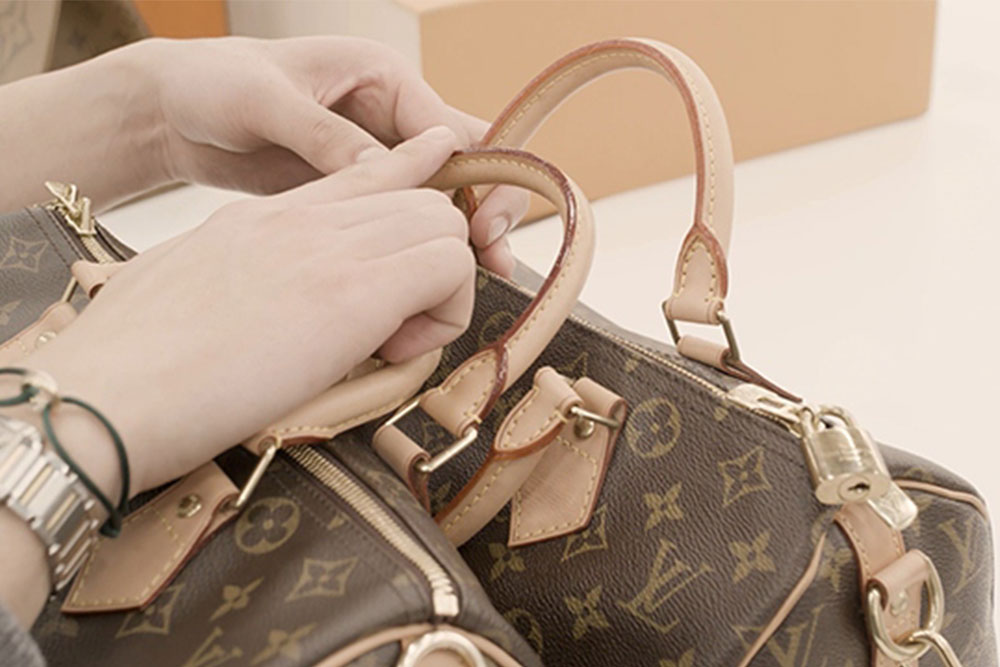
- Monogram Canvas: We look at the color tone, the texture, and the placement of the LV logos. On a Speedy, for example, the LV symbols should be symmetrical from one side to the other. The “LV” is never cut by a seam on an authentic bag (though other parts of the monogram might be).
- Damier Canvas: The pattern should be perfectly aligned at the seams. The number of checkered squares in certain rows is consistent on specific models.
- Vachetta Leather: This untreated cowhide leather used for handles and trim has a unique way of aging, called a patina. We can often tell a fake by the color and texture of its “Vachetta,” which may be synthetic or treated to look aged.
2. The Hardware
This is a huge tell. Counterfeiters often cut corners here.
- Zippers: LV has used several zipper brands over the years, including Eclair, Talon, and their own proprietary zippers. We know which zipper should be on which bag from which era. The engraving on the pull should be crisp and deep, not shallow or blurry.
- Rivets and Snaps: The “Louis Vuitton” text engraved on hardware is extremely precise. We analyze the font, spacing, and depth of every letter. A fake might have a slightly different font or sloppy engraving.
3. The Stitching
Louis Vuitton’s stitching is renowned for its durability and consistency.
- Stitches Per Inch (SPI): We know the expected SPI for different parts of a bag. The handle tab on a Neverfull, for instance, has a specific stitch count.
- Thread Quality: The thread has a specific thickness and is often coated with a special resin for strength. We look for the correct color and sheen.
4. The Heat Stamp and Date Code/Microchip
This is where many fakes fail, but only an expert can spot the subtle errors.
- The Heat Stamp: This is the “Louis Vuitton Paris made in…” stamp. We scrutinize the font, letter spacing, and the depth of the stamp. The “O” in Vuitton should be very round. The legs of the “L” should be short. The “TT”s in Vuitton should be very close but not quite touching.
- The Date Code: Before 2021, the date code needed to be logical. The factory letters had to match the “Made in” country, and the date had to make sense for the bag’s release. We have a complete list of factory codes and their corresponding years of operation.
- The Microchip: For bags made after March 2021, the absence of a date code is expected. The presence of one on a bag claimed to be from 2022 is an immediate red flag. Authentication shifts to an even more intense focus on the physical markers of the bag.
A generalist authenticator simply cannot possess this level of detailed, brand-specific knowledge. They may catch the obvious fakes, but they are highly likely to be fooled by a modern superfake or, just as damagingly, wrongly condemn an authentic vintage piece with unusual characteristics.
Why Other Brands Are Different
Specializing in Louis Vuitton also means recognizing that we cannot apply our expertise elsewhere. Every luxury brand has its own “language” of authenticity.
- Chanel: Authenticating a Chanel bag requires deep knowledge of quilting patterns, specific hologram sticker formats that changed over the years, and the unique construction of their chain straps.
- Hermès: This is another world entirely. An Hermès expert must be able to identify the artisan’s stamp, understand the subtle differences in leathers like Togo and Clemence, and recognize the specific stitching techniques used by their craftsmen.
- Gucci: This brand has a vast and varied history, with frequent changes in leadership and design. Authenticating Gucci requires knowing the specific serial number formats, canvas types, and hardware used during the Tom Ford era versus the Alessandro Michele era.
Claiming to be an expert in all of these brands is a claim to be an expert in everything. And as the old saying goes, if you chase two rabbits, you will lose them both. We have chosen to chase one rabbit and know its every move.
Our Commitment to You
Our specialization is not just a business model; it is a promise. It is a promise that your Louis Vuitton item will be examined by an expert who has dedicated their career to understanding that single brand.
- It’s a promise of accuracy: You get a verdict you can trust, whether you are buying, selling, or filing a dispute.
- It’s a promise of value: Our services and pricing are structured to provide accessible expertise. We believe everyone has the right to protection from counterfeits.
- It’s a promise of confidence: The peace of mind that comes from knowing your treasured item is genuine is priceless.
Conclusion: The Power of Singular Focus
The world of luxury is built on a foundation of expertise, heritage, and unwavering standards. We believe the world of authentication should be no different. By dedicating ourselves exclusively to Louis Vuitton, we honor the brand’s legacy and provide the most robust defense against the counterfeiters who seek to undermine it.
We don’t authenticate everything because you don’t need an authenticator who knows a little bit about every brand. You need an authenticator who knows everything about your brand. When it comes to Louis Vuitton, that is our unwavering commitment. Our specialization is our strength, and that strength becomes your security.
Ready to leverage our specialized expertise? Submit your item for Louis Vuitton authentication and experience the confidence that only a true specialist can provide.
Louis Vuitton Authentication made easy!
You are unsure if you are looking at an authentic or fake LV? We offer the quickest and the most accurate way to get it authenticated for your peace of mind.
Authenticate Now