Damier Ebene authentication requires more than checking if the brown checkerboard looks even. The canvas pattern, printed markings, trim, lining, hardware, stamps, identifier, and model construction all need to be consistent with the exact Louis Vuitton item.
ProAuthenticators specializes only in Louis Vuitton and reviews Damier Ebene handbags and accessories through photos. If you need a professional result, choose from our authentication services and submit complete images instead of relying on a single square or logo.
Damier Ebene changes across models
The same checkerboard canvas appears on totes, travel bags, wallets, pouches, and other products. Pattern scale may be related, but placement, panel cuts, trim, lining, hardware, and stamps differ by model, size, and production period.
A Neverfull should therefore be compared as a Neverfull, not against a Speedy or wallet because all three use Damier Ebene. Model identification remains the first part of material authentication.
What experts examine on Damier Ebene items
Checkerboard pattern and printed signature
We review square size, color relationships, print clarity, spacing, surface texture, and the placement of any printed Louis Vuitton signature. The location and orientation of the signature need to make sense for the model’s panels and seams.
Counterfeiters can reproduce a convincing checkerboard from a distance. Close photos may reveal incorrect print edges, surface, color balance, or a signature that does not fit the surrounding squares.
Canvas surface and flexibility
Damier Ebene is a coated canvas, not a printed leather surface. We examine its visual grain, finish, folds, edge behavior, and the way it follows the item’s construction.
Our canvas and leather resource explains why surface alone cannot produce a verdict. Age, use, storage, and lighting can change shine or flexibility, while the complete item provides the necessary context.
Trim, glazing, and stitching
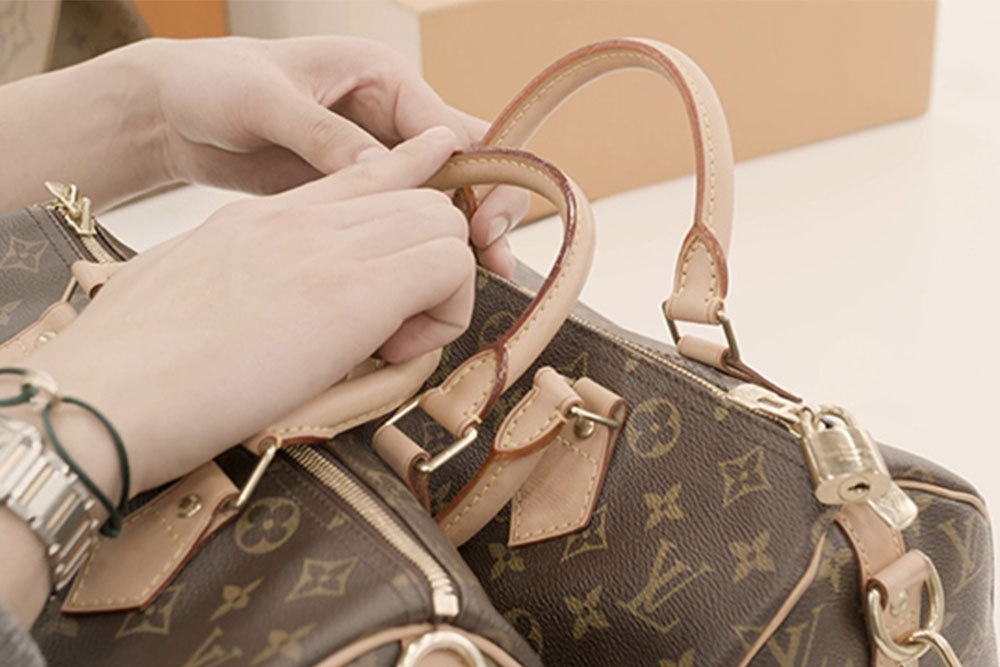
Many Damier Ebene items use darker treated leather trim, but the exact material and color depend on the model. We compare the cut, thickness, edge coating, stitching, tabs, piping, handles, and stress-point reinforcement.
Cracking or wear can appear along folds and high-contact edges. Condition should be evaluated without assuming that damage makes an item counterfeit or that an aged appearance makes it authentic.
Hardware and interior details
Zippers, pulls, rivets, rings, hooks, snaps, feet, and other hardware need model-specific comparison. We review shape, finish, engraving, attachment, and scale relative to the item.
The lining, pocket layout, seams, heat stamp, and identifier area must also fit the model and era. A copied date code cannot correct an interior or hardware combination that does not belong.
Common Damier Ebene myths
Online advice often claims every square must line up perfectly across every seam. Louis Vuitton uses controlled pattern placement, but curves, gussets, pockets, piping, and panel size affect what alignment is possible.
Our list of fake Louis Vuitton signs explains why a single pattern issue should not outweigh all other evidence. Experts look for compatible details across construction, materials, stamps, and hardware.
Another myth is that Damier Ebene never cracks or fades. Authentic coated canvas can show damage through folding, friction, storage, heat, or use, and condition alone does not identify the maker.
Buying a pre-owned Damier Ebene item
Ask for the model name, measurements, interior, heat stamp, identifier area, and repair history before payment. Dark canvas and trim can hide glazing work, corner touch-ups, cracks, or replaced components in low-light photos.
Compare the received item with the saved listing immediately. If the pattern, lining, hardware, or size differs from what was shown, the original images may help support a return request.
For sellers, photograph dark trim from several angles so cracks, edge repairs, and surface touch-ups remain visible. A complete condition description builds more trust than calling every mark “normal wear,” and it gives authentication evidence without forcing the buyer to guess which parts were restored.
If the item includes a pouch, strap, luggage tag, lock, or key set, list each component separately. Removable parts can be replaced or mixed, so they should be shown outside the bag as well as attached.
Photos to submit
Follow the Photo Guidelines and use original images in neutral light. Include the full front, back, sides, base, interior, heat stamp, identifier area, every printed signature, canvas close-ups, pattern at seams, trim, glazing, stitching, handles or straps, zipper, pulls, hardware, and engravings.
If the item is a Neverfull, include all side laces, handle tabs, hook, D-ring, lining, pocket, and pouch if present. Our Neverfull authentication post provides the model-specific checklist.
Start with the exact item, size, and era
Damier Ebene appears across decades of Louis Vuitton production, so the checkerboard alone does not identify the piece. We begin with the model, size, intended use, and likely production period, then compare the canvas placement and every connected component with that specific version. This prevents a common mistake in which a genuine detail from one Damier Ebene product is treated as a universal rule for every tote, travel bag, pouch, or wallet.
Measurements are especially useful when two models share a similar outline or when a listing uses an informal name. Length, height, depth, handle drop, pocket layout, and opening shape can narrow the comparison before small details are reviewed. If the item has been reshaped by storage, we consider the original construction rather than expecting a used bag to hold the same profile as a new boutique example.
Read the checkerboard through the construction
An authentic pattern is cut and assembled to fit a three-dimensional object. Squares may meet piping, disappear into folds, curve around corners, or be interrupted by pockets and reinforcement, so the expected result depends on the panel map. We follow the pattern from front to back and across the base to see if its scale, orientation, and transitions agree with the way that model is built.
Counterfeit factories often focus on making the front panel look convincing because it dominates resale photographs. Problems may become clearer at the side gussets, near the zipper ends, beneath handle attachments, or where the base meets the body. Complete views allow us to evaluate those relationships instead of rewarding a single carefully framed section.
Printed signatures need model-specific placement
The small Louis Vuitton signature printed within selected squares is valuable only when its wording, scale, color, orientation, and location fit the item. A clear signature with tidy letters can still be incorrect if it appears on the wrong row, faces the wrong direction, or repeats differently from the expected panel layout. We also compare how the ink sits on the coated surface and how its edges look under close focus.
Wear can soften printed details, particularly on corners, folds, and areas rubbed by clothing. That change should be consistent with the surrounding canvas rather than appearing isolated or artificially aged. A protected signature inside a fold may remain sharper than one on the exterior, and that difference can be entirely reasonable when the rest of the item shows a coherent history.
Dark trim can hide repairs and replacements
Treated leather and dark edge coating make Damier Ebene practical, but they can conceal later work in ordinary listing photos. Reglazed handles, touched-up corners, replaced tabs, or recolored trim may look uniform from a distance while showing different texture, thickness, or finish in close views. Those changes concern condition and originality, yet they can also cover details needed for authentication.
Photograph repaired areas in side light and include the transition between the repair and the original material. If a handle, strap, zipper pull, or pouch was replaced, state what is known instead of presenting the set as untouched. An altered component does not automatically decide the authenticity of the remaining item, but honest repair context makes the evidence easier to interpret.
Interior wear should match the claimed history
The lining and pocket system often provide better evidence than the polished exterior because counterfeit listings frequently show them only briefly. We compare lining material, color, weave or coating, seam direction, pocket proportions, zipper tape, attachment points, and the location of stamps or identifiers. These details should form the interior that belongs to the stated model and period.
A used bag can have stains, pilling, peeling, odor, or softened pocket edges without being counterfeit. The question is not whether the interior looks new, but whether its materials and aging are compatible with the exterior and claimed use. A heavily worn lining inside an apparently untouched bag may need explanation, just as a newly replaced lining may remove original production evidence.
Hardware must work as a complete system
Zipper pulls, teeth, sliders, snaps, rings, hooks, rivets, locks, and feet should be assessed in relation to each other. We compare shape, scale, finish, engraving, attachment, and function, while allowing for normal surface wear. A bright replacement pull beside older hardware may be easy to notice, but a well-matched generic component can require closer examination.
Do not polish metal before taking authentication photos because polish can change the surface and fill shallow engraving. Show the front, back, side, and attachment of each important component, including zipper hardware at both ends. If a lock or key set is included, photograph it separately and avoid assuming it was originally sold with the bag simply because its finish looks similar.
A date code supports context, not the verdict
Older Damier Ebene items may include a visible date code, while recent pieces may use Louis Vuitton’s newer internal identification system. A code should be read according to its era and checked against the model, country marking, materials, and construction. It is not a unique serial number, and a copied format cannot rescue an item with incompatible features.
Faded or partially hidden codes can occur through use, lining wear, or their original placement. Do not scrape, wet, or stretch the area to make a marking clearer. Take several focused images with the light moving across the surface, then include a wider view showing exactly where the code or identifier area sits inside the item.
Compare condition without turning it into proof
Cracking, fading, stiffness, and corner wear are common concerns with coated canvas. Authentic items can develop damage through heat, folding, storage pressure, cleaning products, or long use, while counterfeit items can be deliberately aged. Condition can explain appearance, but it cannot stand in for material and construction analysis.
Look for a consistent pattern of use across the handles, opening, base, interior, and hardware. If one area appears much newer, determine whether it was protected, replaced, or repaired. This broader record helps separate ordinary ownership history from production details that should have been present from the beginning.
Prepare a useful pre-purchase submission
Ask the seller for original, unfiltered photographs rather than screenshots copied from another listing. The image set should include the complete exterior, every side, the base, interior, stamps, identifiers, hardware, pattern transitions, trim, and any accessories. If a decisive view is missing, request it before paying instead of hoping the item can be evaluated after the return window begins.
Keep the listing description, messages, and photographs until the transaction is settled. When the item arrives, compare the received piece with that record before wearing or cleaning it. A timely review can help you decide while marketplace protections are still available and can document differences that have nothing to do with the authentication verdict itself.
Authenticate the item, not just the canvas
Damier Ebene is an important material checkpoint, but the item includes much more than its exterior print. Size, shape, seams, trim, lining, hardware, stamps, and production context must point to the same model.
Choose the needed option on our Services & Pricing page and send every requested angle before completing a resale transaction. A complete image set gives the team enough context to compare the model and material together.
Does every Damier Ebene item have the same brown color?
No, photography, age, finish, model, and production variation can affect appearance. Experts compare color with surface, print, trim, and the complete item.
Does perfect checkerboard alignment prove authenticity?
No, counterfeiters can copy obvious alignment, and authentic placement depends on construction. Pattern is useful only as part of a wider review.
Is Damier Azur authenticated the same way?
The checkerboard concept is related, but the lighter color, trim, staining, and wear create different considerations. Read our Damier Azur authentication post for that material.
Louis Vuitton Authentication made easy!
You are unsure if you are looking at an authentic or fake LV? We offer the quickest and the most accurate way to get it authenticated for your peace of mind.
Authenticate Now