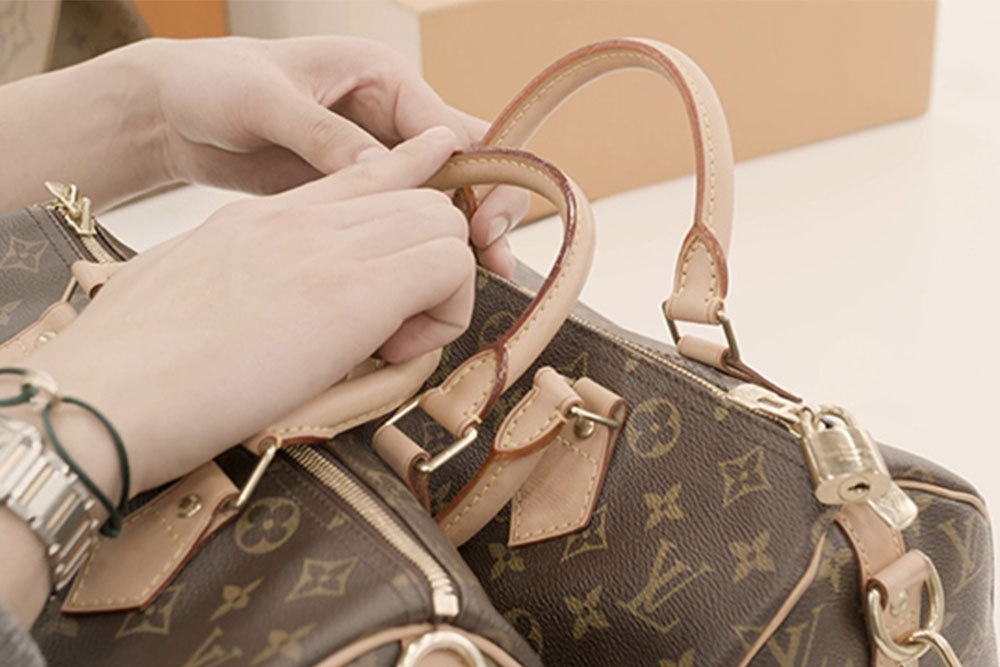
Yes, a Louis Vuitton bag can be authentic without a receipt. Receipts are often lost, discarded, given to another owner, or separated during resale, and the absence of paperwork does not change how the item was originally made.
The opposite is also true: a receipt does not prove that the bag shown with it is authentic. ProAuthenticators reviews the physical Louis Vuitton item through photos, and you can select from our authentication services even if no original paperwork remains.
What a receipt can and cannot show
A genuine receipt may document that a transaction occurred at a certain store or through an official channel. It may include a date, product description, reference, price, purchaser information, and payment details.
That document does not permanently attach itself to one bag. It can be paired with another item, copied, edited, reused in multiple listings, or shown without the item that was actually purchased.
Why authentic bags lose their receipts
Louis Vuitton items may remain in use for decades and change owners several times. Gifts may be given without price paperwork, estates may separate documents from possessions, and consignment sellers may receive only the item.
Vintage bags are especially likely to lack original receipts. A missing paper trail may affect a buyer’s comfort or the completeness of a collectible set, but it does not create a conclusion about the bag’s construction.
How authentication works without paperwork
Our authentication process examines multiple item-specific checkpoints. The exact review depends on the model, material, era, and components, but it generally considers the following areas.
Model and construction
We compare proportions, panel shapes, seams, pockets, closures, handles, straps, reinforcement, and interior layout. The design needs to match the stated model and production context.
A familiar silhouette is not enough. Counterfeiters copy popular models, but the complete construction may reveal details that do not belong together.
Materials and finishing
Canvas, leather, textile, lining, glazing, stitching, print, embossing, and surface treatment are compared with the exact item. Wear is considered without treating age as proof.
Materials also need to interact correctly. A convincing canvas print cannot compensate for incorrect trim, seam finishing, or lining.
Hardware, stamps, and identifiers
Zippers, locks, clasps, rivets, rings, engravings, heat stamps, country information, date codes, and newer identification practices contribute evidence. No single code or stamp creates the verdict.
The expected identifier depends on production period. A missing visible date code may be normal for certain older or newer items, while the rest of the bag still needs full review.
What to submit instead of a receipt
Clear photos of the item are more useful to our process than a receipt alone. Follow the Photo Guidelines and include the full front, back, sides, base, interior, heat stamp, identifier area, hardware, engravings, handles or straps, stitching, glazing, lining, and model-specific details.
If you have a receipt, invoice, gift record, service document, or original listing, include it as supporting context after the item photos. State clearly if you are unsure that the paperwork belongs to the exact item.
Seller claims are not independent proof
A seller may say the bag was purchased at a boutique, inherited, received as a gift, or authenticated elsewhere. Those statements may be sincere, but they are not independent evidence for a marketplace, buyer, or payment provider.
Our post about professional reports and seller claims explains why third-party documentation can create stronger support. The item still has to be reviewed before a report is issued.
Packaging does not replace a receipt or authentication
Boxes, dust bags, ribbons, tags, and cards are also removable. Our packaging authenticity post explains why a complete presentation can still contain an item that does not match.
Buyers should ask for bag details before being influenced by a polished unboxing photo. The strongest evidence comes from the product itself and a professional review of compatible checkpoints.
Buying a bag with no receipt
Ask the seller for clear original photos, a detailed condition description, repair history, model information, and a return policy. Save the listing and messages in case the item received differs from the photos.
Check our Frequently Asked Questions for service information, then submit the item early enough to act within the marketplace deadline. Lack of a receipt should lead to careful verification, not an automatic rejection.
Selling an item after the receipt is lost
Describe the missing paperwork honestly and avoid making a boutique-purchase story the main evidence in the listing. Provide complete item photos, measurements, condition notes, repair history, and independent authentication documentation that a buyer can review.
A clear listing can build trust without pretending the original receipt still exists. It also reduces repeated questions and helps the buyer understand exactly which documents will be included with the sale.
The item and the transaction prove different things
A receipt records a purchase, while authentication evaluates the physical Louis Vuitton item. Those are connected only if the document can be reliably tied to the exact piece being reviewed, and even then, the item still needs examination. A legitimate receipt can be reused, copied, edited, or paired with a different bag, so paperwork cannot carry the verdict by itself.
The opposite is also true. An authentic bag can remain authentic after a receipt is lost, discarded, damaged, or separated during resale. Ownership records may affect a buyer’s comfort or the set’s perceived completeness, but missing paper does not change the manufacturing evidence built into the bag.
Receipts are commonly separated during ordinary ownership
Gifts may reach the recipient without price documentation, estates may distribute items without original files, and owners may discard receipts after a return period ends. Vintage pieces can pass through several families, consignment stores, or collectors over decades. It would be unrealistic to expect every authentic item to retain a complete paper trail.
Digital accounts can also change through email loss, account closure, or purchases made by another person. These gaps should be described honestly, but they are not authentication failures. The review simply shifts to the item and the visual evidence available.
A boutique receipt is not a unique serial certificate
Retail receipts may list a reference, description, date, location, price, or customer information, but they are not public certificates that anyone can independently verify against a unique bag. Several items of the same model can share the same product reference. A matching name therefore supports identity at most and does not prove the submitted piece was the one purchased.
Counterfeit sellers understand the trust created by paperwork and may supply fabricated or altered documents. Others reuse a real receipt obtained with an authentic purchase. We examine the receipt only as context and do not let it outweigh construction, material, hardware, stamps, or identifiers on the item.
Authentication replaces the need for purchase paperwork
A professional photo review begins by identifying the exact model, size, material, and likely era. Experts then compare proportions, panel construction, seams, trim, glazing, stitching, hardware, lining, stamps, and production details. These features remain on the item regardless of where its receipt was stored.
The strongest submission shows how those elements relate to each other rather than collecting isolated logo close-ups. A full exterior, complete interior, side profiles, base, and detail images allow the authenticator to interpret each mark within the model. Missing paperwork does not prevent that process when the visual evidence is sufficient.
Seller statements remain interested claims
A seller may be sincere when saying a bag came from a boutique, belonged to a relative, or was authenticated elsewhere. The problem is not necessarily honesty; it is that the person benefiting from the sale is not an independent source. Their statement should be recorded but should not replace third-party evaluation.
Ask for factual details instead of reassurance alone. Useful questions include how the item was acquired, which components were replaced, whether it was repaired or recolored, and if the listing photos show the exact item. Clear answers help with condition and provenance even though they do not establish authenticity.
Other documents also have limits
Gift receipts, order emails, bank statements, warranty records, repair invoices, and appraisal pages can support ownership history. Each document answers a narrow question and may not identify the exact piece now being submitted. Personal data should be hidden before sharing, while product references, dates, and relevant service details remain visible.
A repair record can be helpful when an authentic component was replaced, but it still does not authenticate untouched areas automatically. An appraisal may estimate value based on an earlier inspection, yet the current item must match the described one. Documentation is strongest when it complements physical evidence instead of standing in for it.
Bags without receipts can still be sold responsibly
A seller should state that the original receipt is unavailable rather than implying it exists elsewhere. Provide clear photographs, measurements, repair history, included accessories, and an independent authentication document if one has been obtained. This gives the buyer practical information without turning a missing paper into a dramatic concern.
Do not create certainty by calling packaging or a date code proof. A dust bag may have been acquired separately, and a date code is production context rather than a unique serial number. Honest presentation builds more trust than a collection of weak clues described as guarantees.
Buyers should preserve return options
Before paying, review the platform’s deadline and confirm what evidence it accepts if the item is not as described. Request the photographs needed for pre-purchase authentication and save the complete listing, including seller messages. If images are insufficient, decide if the return policy gives enough time for an in-hand review.
Once the item arrives, compare it with the saved listing before using, cleaning, or repairing it. Submit original photos promptly and keep packaging until the transaction is settled. Authentication can clarify the item, while the listing record can document substitution, missing accessories, or undisclosed damage.
Replacement parts do not create a receipt requirement
An authentic bag may have a replaced zipper, handle, lining, strap, or edge coating after years of use. A receipt for the original purchase is not needed to recognize that history, but repair details should be disclosed because replaced areas may remove useful evidence. Photos of service work and unaffected components help the authenticator assess what remains.
Repairs can also affect resale value or a platform’s description requirements even when the bag is authentic. Keep those questions separate from the verdict. A clear report should not be stretched into a claim that the item is untouched, complete, or worth a particular amount.
Choose documentation that matches the intended use
A buyer seeking personal reassurance may need a different result from a seller listing a valuable bag or a client preparing a payment dispute. Review the available service and certificate options before submitting so the output fits the transaction. If a platform requires a particular document, confirm that requirement before the deadline.
The absence of a boutique receipt does not prevent professional evidence from being created now. Complete photographs and accurate item details allow the authentication team to form an independent opinion based on the bag itself. That is more relevant than trying to reconstruct paperwork that may never have accompanied the current owner.
Get professional proof from the item
An authentic Louis Vuitton item does not become fake because its paperwork was lost. Choose the service that fits your purchase, sale, or claim on our Services & Pricing page and let the physical details support the conclusion.
Can ProAuthenticators review an LV item without a receipt?
Yes, our authentication is based on clear item photos, and a receipt is not required to establish the item’s construction. Supporting documents may be included if available.
Is a digital receipt better proof than a paper receipt?
It may be easier to trace or preserve, but it still documents a transaction rather than permanently identifying the item shown. The physical Louis Vuitton product needs its own review.
Does missing paperwork reduce resale value?
It can affect buyer comfort or collectible completeness, depending on the item and market. Authentication documentation can help support a listing even when the original receipt is gone.
Louis Vuitton Authentication made easy!
You are unsure if you are looking at an authentic or fake LV? We offer the quickest and the most accurate way to get it authenticated for your peace of mind.
Authenticate Now